
Every fence reaches a point where the homeowner has to make a decision: fix what is broken or tear it down and start over. It is not always obvious which option makes more sense. A fence that looks rough on the surface might have solid structure underneath and only need targeted repairs. A fence that looks mostly fine might have rotted posts and failing footings that make it a replacement candidate. Legacy Fence Company handles both repair and replacement across Austin and Central Texas, and we give honest recommendations based on what we find during the inspection, not what generates the bigger invoice.
Here is how to evaluate your fence and decide whether repair or replacement is the right move for your property, your budget, and your timeline.
When Repair Is the Right Call

Repair works when the damage is isolated. A few broken boards, a single leaning post, a sagging gate, a section hit by a fallen branch. These are contained problems with contained fixes. The rest of the fence is structurally sound and has years of life left. Replacing the entire fence in this situation wastes money.
Repair also makes sense when the fence is relatively young. A fence that is five or six years old with one rotted post or a few cracked boards does not need replacement. The underlying structure is still within its lifespan. Fix the failed components, stain the fence, and move on.
The key question for repair is whether the fix will last. If you reset a leaning post with proper concrete footings and the adjacent posts are still solid and plumb, the repair should hold for years. If the adjacent posts are also starting to lean, the repair is a temporary fix and the problem will come back. That is when repair starts becoming a money pit.
Common repairs that deliver good value include replacing individual boards or pickets, resetting one to three leaning posts with deeper concrete footings, fixing or replacing a sagging gate, replacing rusted or worn hardware, and patching a storm-damaged section. These fixes are fast, affordable, and extend the useful life of the fence without the cost of a full rebuild.
When Replacement Is the Better Investment
Replacement makes sense when the damage is systemic rather than isolated. If more than thirty percent of the fence is compromised, the cost of fixing everything individually approaches or exceeds the cost of a new fence. At that point, you are paying repair prices for a fence that will continue to fail in new places.
Replacement is also the right call when the fence is structurally unsound throughout. Posts that are rotted at the base across the entire fence line, rails that are pulling away from posts in multiple sections, widespread termite damage, and concrete footings that have cracked and shifted are all signs that the foundation of the fence has failed. Patching the surface does not fix the foundation.
Frequent repairs are another signal. If you have called a contractor two or three times in the past few years for different problems on the same fence, the fence is telling you it is past its useful life. Each repair buys a little more time but the total spend keeps climbing. At some point, the accumulated repair cost exceeds what a new fence would have cost if you had replaced it after the first major failure.
Finally, replacement makes sense when you want to upgrade. If your fence is builder-grade pine that was never properly stained, and you want to switch to cedar or composite, replacement is the opportunity to make that change. Many homeowners in Pflugerville and Round Rock are replacing aging pine fences that were installed during the original construction with cedar or composite for better longevity and lower maintenance.
Comparing the Cost of Repair vs Replacement
Repair costs depend on the scope: how many boards, how many posts, how much concrete, and how much labor. A single post reset costs significantly less than a full fence replacement. But the comparison only works if the repair actually solves the problem for the long term.
Ask yourself how long the repair will last. If the fix gives you five or more additional years of solid fence performance, it is a good value. If the fix gives you twelve to eighteen months before the next issue surfaces, you are delaying the inevitable and spending money along the way.
Replacement costs more upfront but resets the clock. A new fence with proper post depth, quality materials, and professional installation should last fifteen to twenty-five years depending on the material. When you spread the cost of replacement over that lifespan, the per-year cost is often lower than the accumulated repair spend on a fence that keeps failing.
We provide estimates for both options when the decision is not obvious. You can see the numbers side by side and make an informed choice.
Partial Replacement: When Half the Fence Needs Work
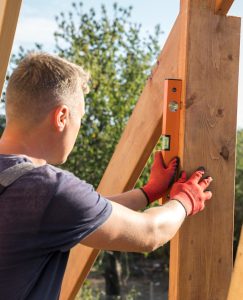
Not every decision is strictly repair or full replacement. Partial replacement is a middle option that works when one side or section of the fence is failing but the rest is still solid. We tear down and rebuild the damaged section while leaving the good sections in place.
Partial replacement is common on properties where one side of the fence faces south and has taken heavy UV damage while the north-facing side is still in good condition. It also comes up when a tree fell on one section, when storm damage hit one side of the property, or when one section was built with different posts or materials than the rest.
We match the new section to the existing fence in material, board width, height, and stain color so the result looks consistent. If the existing fence is cedar, we use cedar. If it is board-on-board, we build board-on-board. The goal is a seamless transition between the old and new sections.
Partial replacement costs more than a targeted repair but less than tearing down the entire fence. It is a practical option when the damage is concentrated in one area and the rest of the fence has years of life remaining.
Get an Inspection Before You Decide
The worst way to make this decision is by guessing from the surface. A fence that looks rough on top might have solid posts and footings underneath. A fence that looks decent might have rotted posts hidden below the soil line. The only way to know is to inspect the structure, not just the surface.
During our inspection, we test every post for stability, check boards for rot and insect damage at the base where problems start, evaluate gate function, and assess the overall structural integrity of the fence. We give you an honest assessment: repair, replace, or a partial replacement for the worst sections with repair for the rest.
If you are not sure which direction to go, start with an inspection. It takes less than an hour and gives you the information you need to make the right call.
One more thing to consider: timing. If your fence is failing at a time when you are also thinking about selling your home, replacing makes a stronger impression on buyers than a patched fence. If you plan to stay for another ten or fifteen years, replacement with an upgraded material like composite eliminates future maintenance cost entirely. If you just need the fence to hold for another three to five years while you figure out long-term plans, a targeted repair at the right points may be all you need. The right answer depends on your situation, not a general rule.