
At Legacy Fence Company, Tarrytown represents some of the most technically demanding residential fence work we do in Austin. The combination of large lots that produce long fence lines, the live oak canopy that is among the most extensive of any Austin neighborhood, the root systems that spread through much of the available yard space, and the high property values that come with high expectations for quality all create fence installation conditions that reward careful planning and experienced execution.
Tarrytown and the surrounding Tarrytown and other Austin TX neighborhoods along Lake Austin Boulevard and the western streets of Old West Austin have fence installation conditions that are distinct from any other part of the city. Here is what homeowners in Tarrytown need to know before starting a fence project.
This guide covers the root navigation, terrain, and quality standards that shape fence installation in Tarrytown.
Live Oak Root Systems: The Defining Challenge in Tarrytown
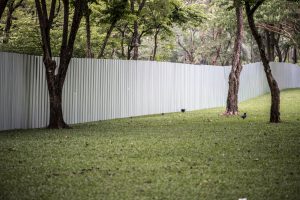
Tarrytown has some of the most mature live oak trees of any residential neighborhood in Austin. These trees, many of which are fifty to one hundred or more years old, have root systems that radiate from the trunk in all directions and at multiple depths. The shallow roots that spread laterally well beyond the drip line are the ones most frequently encountered during fence post installation. In Tarrytown, encountering live oak roots during a fence estimate walk is not exceptional. It is the expectation.
Our approach to root conflicts in Tarrytown starts during the estimate visit. We walk the planned fence line, identify the tree locations and sizes, estimate the likely root zone extent for each tree, and flag the post locations where root conflicts are probable. For those locations, we discuss the options with the homeowner before any plan is finalized: adjusting the post location slightly to avoid the root concentration, spanning the section with an extended rail that distributes the fence load across a longer span without a post in the root zone, or using a surface-mounted post anchor on a concrete pad where in-ground installation would require cutting through significant root structure.
Our guide on preparing your yard for fence installation in Austin covers what homeowners can do before the installation crew arrives. For Tarrytown specifically, walking the fence line before the estimate and noting any visible surface roots or areas of obvious root concentration near the planned fence line helps us have a more productive conversation during the estimate visit.
Large Lots and Long Fence Lines in Tarrytown
Tarrytown lots are substantially larger than most Austin residential lots. A Tarrytown fence project may involve several hundred linear feet of fence across multiple sections of the property. On these longer fence lines, the site variables accumulate: root conflicts at multiple points, potential grade changes as the fence line moves from the front to back of the property, and variation in substrate conditions between the eastern clay-dominant sections and the western limestone-influenced areas near MoPac.
The longer fence lines in Tarrytown also make installation quality more consequential. On a one-hundred-foot fence, a post or two set at slightly insufficient depth creates a localized issue. On a four-hundred-foot Tarrytown fence line, systematic post installation at the correct depth and concrete specification is what determines whether the entire fence holds up uniformly for its intended lifespan. We approach every Tarrytown project with post installation as the primary quality variable that everything else depends on.
Our wood fence installation service covers the full scope of cedar fence installation in Tarrytown, from post setting in challenging root and substrate conditions through board installation and gate hanging. Gate installation on Tarrytown fence projects requires the same deeper post specification as elsewhere, because gate posts on long heavy Tarrytown gates carry proportionally more load.
Cedar Standards in Tarrytown

Tarrytown’s property values create a higher baseline expectation for cedar board quality and finished fence appearance than most Austin neighborhoods. A cedar fence on a Tarrytown property that may be worth several million dollars is a visible element of a high-value asset. The board grade, the evenness of the finished surface, the precision of the gate alignment, and the quality of the stain application all matter more on these properties than on a utilitarian backyard fence in a suburban subdivision. We use Number 2 or better Western red cedar as the minimum grade for Tarrytown fence boards, and some homeowners with highly visible fence sections specify Select grade cedar for the more consistent grain and cleaner finished appearance it provides.
The lack of formal HOA governance in Tarrytown gives homeowners flexibility in material and style choices. Cedar board-on-board is the neighborhood standard by custom rather than by rule, and it fits the established residential character of the neighborhood so naturally that most Tarrytown homeowners choose it without needing to evaluate alternatives. The few Tarrytown properties that have been renovated with contemporary design elements occasionally request horizontal cedar or composite, and these materials are fully appropriate where they fit the property character.
Our guide on how to fix a leaning fence in Austin clay soil provides context for understanding what happens to posts that are set at insufficient depth in Austin’s clay soil. For Tarrytown homeowners replacing a fence where posts have failed, the guide explains what caused the failure and what the correct installation approach looks like for the replacement. Request a free estimate for your Tarrytown fence project and we will walk your property, assess the root and terrain conditions, and give you a complete written scope.