
Choosing the right fence material for your Austin property is one of the most important decisions you will make during the project. The material determines how the fence looks, how long it lasts, how much maintenance it requires, and how well it handles Austin’s specific climate challenges. Legacy Fence Company installs every major fence material across Austin and Central Texas, and we have seen what performs well and what does not in this market over thousands of installations.
Here is an honest breakdown of every fence material we offer, how each one performs in Austin’s climate, and how to choose the right one for your property.
Cedar and Wood Fences
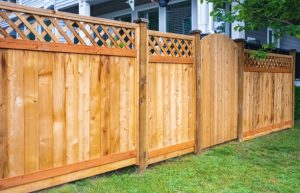
Cedar is the most popular fencing material in Austin and the one we install most often. It resists rot, insects, and moisture naturally because of the oils in the wood. It weathers to a silver-gray if left unstained, or it can be stained to maintain its warm reddish-brown tone. Cedar board-on-board privacy is the most requested style across every neighborhood we serve, from Central Austin to Cedar Park to Georgetown.
Cedar needs staining every two to three years in Central Texas to maintain its appearance and protection. South-facing fences in neighborhoods with minimal tree cover may need staining closer to every two years. Without staining, cedar will still last longer than pine, but it will gray and eventually begin to crack and split at the surface.
Pressure-treated pine is the most affordable wood option. It costs less upfront than cedar but requires staining sooner after installation and more frequently throughout its life. Pine dries out faster in Austin’s intense UV exposure, which means it cracks, warps, and deteriorates sooner. For homeowners who want wood fencing at the lowest upfront price and are committed to maintaining it, pine works. For homeowners who want the best long-term value in wood, cedar is the better choice.
Composite Fences
Composite is the fastest-growing fence material in Austin. It is made from recycled wood fibers and recycled plastics, engineered into boards that look like real wood but require zero maintenance. No staining, no sealing, no painting, no rot, no termites, no warping. Composite handles Austin’s UV, rain, and temperature swings without fading, cracking, or degrading.
The upfront cost is higher than cedar, but the lifetime cost is often lower because there are no maintenance expenses over the fence’s twenty-five-year-plus lifespan. A cedar fence that gets stained every two to three years for fifteen years accumulates a significant maintenance cost that composite avoids entirely. Composite is especially popular in newer developments in Cedar Park, Leander, and Georgetown where homeowners want a premium look with zero ongoing effort.
Modern composite panels replicate natural wood grain patterns and color variation convincingly. Available finishes include cedar tone, walnut, redwood, and gray weathered wood. From a few feet away, most people cannot tell the difference between composite and real wood.
Vinyl Fences
Vinyl is low-maintenance and resistant to yellowing, cracking, and fading when UV-rated commercial-grade panels are used. It is a strong option for pool areas because it is non-porous, does not absorb water, does not splinter, and is easy to clean. Vinyl is also popular for front yards and HOA neighborhoods where consistent, uniform appearance matters.
Quality matters with vinyl more than with almost any other material. Lower-grade vinyl from retail stores can yellow, become brittle, and crack within a few years under Austin’s UV exposure. We install only commercial-grade, UV-rated panels that are specifically formulated for Southern climates. The difference in longevity between cheap vinyl and commercial-grade vinyl is significant.
Vinyl is lighter than wood and composite, which makes it slightly less wind-resistant. In high-wind areas, we reinforce vinyl rails with aluminum or steel inserts to add structural rigidity.
Aluminum and Ornamental Iron Fences
Aluminum is rust-free, low-maintenance, and the most popular material for pool fences in Austin. It provides visibility into and out of the pool area, meets code requirements for height and gate hardware, and comes in black, bronze, and white finishes. Aluminum is also used for decorative front yard fencing, estate perimeters, and commercial properties where appearance matters.
Ornamental iron provides maximum strength and security. It is the material of choice for estate properties, driveway gates, and high-security commercial applications. Iron is most common in Westlake Hills, Lakeway, and Bee Cave where estate-scale properties and custom gate entries are standard. Iron requires occasional touch-up at welds and scratches to prevent rust, but with basic maintenance it lasts for decades.
Chain Link Fences
Chain link is the most affordable fencing option available. It is durable, requires virtually no maintenance, and works well for property perimeters, pet enclosures, construction sites, and commercial security applications. Available in standard galvanized finish and vinyl-coated options in green, black, and brown. Privacy slats can be woven into the mesh for screening.
Chain link is not a privacy fence and it does not add curb appeal in the way that wood, composite, or iron does. But for applications where function matters more than aesthetics, chain link delivers the most linear footage per dollar of any material on the market.
How to Choose the Right Material for Your Property
Start with your priorities, not the price tag. If low maintenance is the top priority, composite or vinyl. If natural appearance and warmth matter most, cedar. If you need maximum security or a decorative statement, ornamental iron. If you are fencing a pool, aluminum or vinyl. If budget is the primary constraint, pine or chain link.
Factor in your sun exposure. South-facing fences in full sun degrade fastest. Composite and vinyl handle UV best. Cedar performs well when stained on schedule. Pine struggles in full Austin sun without frequent maintenance. If your fence will face south with no shade, weigh that into your material decision.
Check your HOA rules before making a decision. Some HOAs restrict materials, colors, and styles. Knowing the rules in advance prevents ordering materials that get rejected during architectural review and having to restart the process. We work with HOAs across Austin and can help you confirm compliance before you commit to any material.
Matching the Material to Your Specific Conditions
The best fence material for your property depends on more than just your budget. It depends on your specific conditions. A south-facing fence line in Pflugerville with no tree cover and full sun exposure all day will degrade wood faster than a north-facing fence in Westlake Hills under a mature oak canopy. The same cedar fence can last eight years in one location and eighteen years in another based purely on UV exposure and shade.
If your fence will face south or west with no shade, composite and vinyl are the strongest performers because they are engineered to handle UV without degrading. Cedar holds up well with consistent staining, but if you are not committed to staining every two to three years, the wood will crack and gray. Pine in full Austin sun without staining is the worst-performing combination and the one we see failing most often in our repair work.
Soil conditions matter too. If your property has heavy clay, post depth and concrete volume are more important than the fence material itself. A beautiful composite fence on shallow posts in Pflugerville clay will lean just as fast as a cheap pine fence on the same shallow posts. The material above ground is only as good as the foundation below it.