
At Legacy Fence Company, the material selection question in North Austin comes up in almost every estimate conversation. Cedar, vinyl, and composite each have genuine advantages in this part of the city, and the right choice depends on your specific HOA requirements, your maintenance preferences, and how long you plan to own the property. There is no universally correct answer, but there is almost always a clearly better answer for any given homeowner’s situation.
The fence projects we take on across Austin TX from North Austin homeowners cover all three materials, and we give the same honest assessment of trade-offs regardless of which one we end up installing. Here is how each material performs in North Austin specifically.
This guide covers cedar, vinyl, and composite against the specific conditions of North Austin: the HOA landscape, the clay soil, the UV exposure, and the range of housing ages in this part of the city.
Cedar Fencing in North Austin: The Standard Choice
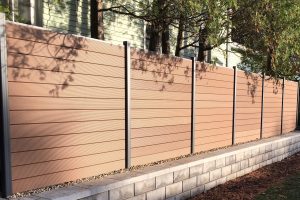
Cedar board-on-board privacy fencing is the default choice in North Austin and has been for decades. It is accepted by essentially all North Austin HOAs that specify wood fencing, which makes it the lowest-friction material selection for homeowners in governed communities. It fits the architectural character of North Austin’s established neighborhoods and suits both the older ranch-style homes in areas like Wells Branch and Gracywoods and the newer builds in subdivisions along Parmer Lane.
The trade-off with cedar in North Austin is maintenance. Austin’s high UV exposure and heat accelerate cedar degradation more than most homeowners expect when they install the fence. Unstained cedar grays and begins checking within a few years of installation. A cedar fence that receives consistent staining every two to three years in North Austin can last fifteen years or more. A cedar fence that receives no staining maintenance often shows significant deterioration in half that time.
Our wood fence installation service covers cedar in all configurations available in North Austin, and our guide on how long a wood fence lasts in Austin covers what affects cedar longevity in this climate specifically. For homeowners who are replacing an old cedar fence and considering whether to stick with cedar or upgrade to a lower-maintenance material, that guide is useful context for the decision.
Vinyl Fencing in North Austin: The Low-Maintenance Alternative
Vinyl privacy fencing has grown steadily in North Austin as an alternative to cedar. It requires no staining, does not warp or crack in Austin heat, and holds its appearance through the seasonal extremes of North Austin’s climate without annual maintenance. For homeowners in North Austin who found cedar maintenance burdensome and are replacing their fence, or who are installing a first fence on a newer lot and want to minimize ongoing maintenance demands, vinyl is a practical choice.
The HOA acceptance of vinyl in North Austin varies by community age and guidelines. Most newer North Austin HOAs explicitly permit vinyl as an approved alternative to cedar. Some older community associations still specify cedar only. Confirming HOA approval for vinyl before selecting it prevents having to resubmit an application with a different material. Vinyl costs somewhat more than cedar per linear foot on a first installation but eliminates the staining cycle, which is a meaningful long-term cost offset.
Quality varies in vinyl fencing products. Thicker-walled vinyl with UV stabilization holds up better in Austin’s climate than thin-walled budget vinyl. When comparing vinyl estimates, ask about the product specifications. A contractor who uses the same budget vinyl product for every installation regardless of climate may not be matching the material to North Austin’s UV demands.
Composite Fencing in North Austin: Growing in Popularity
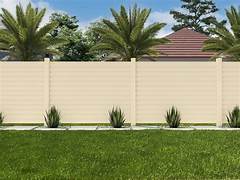
Composite fencing is the newest of the three major privacy fence materials to gain meaningful market share in North Austin. It combines wood fiber and recycled plastic in a formulation that provides the natural wood appearance of cedar with low-maintenance performance similar to vinyl. For homeowners who want the aesthetic of cedar without the maintenance cycle, composite offers a compelling alternative where HOA requirements permit it.
The HOA acceptance of composite in North Austin is less consistent than cedar or vinyl. Some newer North Austin communities have updated their guidelines to explicitly include composite as an approved material. Many older community associations have guidelines that were written when composite was not widely available and may not address it. Getting HOA approval for composite sometimes requires presenting the material to the community association for a specific approval decision rather than relying on existing guidelines.
Our guide on the pros and cons of composite fencing for Texas homes covers the full composite trade-off in Austin’s climate, including when it makes financial sense compared to cedar and vinyl. Our guide on what type of fence is best for Texas weather provides the broader material comparison context. Request a free estimate and we will assess your specific North Austin property, confirm your HOA requirements, and recommend the material that fits your situation best.