
At Legacy Fence Company, cedar fence installation in West Austin consistently requires more careful planning and higher execution standards than the same material in other parts of the city. The combination of large lots with long fence lines, extensive live oak root systems, limestone substrate in the western portions of the area, and the higher property values that come with higher expectations for finished quality all push cedar fence installation here toward a more demanding version of what is otherwise a familiar material.
The West Austin cedar fence owners in Tarrytown, Rollingwood, Lost Creek, and Davenport Ranch approach their fence projects with a clear sense of what they want, a firm opinion about the finished appearance, and a reasonable expectation that the contractor knows how to handle the specific site conditions this part of Austin produces. This guide covers what cedar installation looks like in West Austin and what to expect from a quality project here.
Here is what distinguishes cedar fence installation in West Austin from the rest of the city.
Board Quality and Visual Standards in West Austin
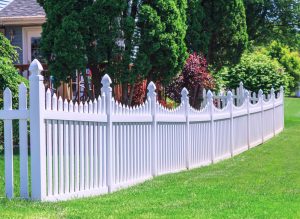
The property values throughout West Austin’s established communities create a higher baseline expectation for cedar board quality and finished fence appearance. A cedar fence in Tarrytown or Rollingwood is a visible element of a property that may be worth several million dollars. The board grade, the consistency of the finished surface, the precision of the gate alignment, and the evenness of the stain application all matter more on these properties than on a utilitarian backyard fence in a suburban subdivision.
Number 2 or better cedar is the appropriate grade for West Austin fence boards, consistent with quality cedar installation throughout Austin. Some West Austin homeowners with fences on highly visible property boundaries specify Select or Clear grade cedar for those sections, which produces a cleaner grain with fewer knots and a more refined finished appearance. The cost difference between Number 2 and Select grade cedar is real but modest relative to the overall project cost on a large West Austin lot.
Gate quality is particularly visible in West Austin. A gate that sags, drags, or fails to latch reliably stands out more prominently on a high-value property than it would elsewhere. We size gate posts correctly for the gate weight on every West Austin project and use hardware appropriate for the gate size and expected usage. Gate hanging is adjusted to be level and plumb before the project is closed, and we walk the gate function with the homeowner at completion.
Navigating Live Oak Roots in West Austin Cedar Projects
Cedar fence post installation in West Austin is frequently complicated by live oak root systems in ways that installation in most other parts of Austin is not. The mature live oaks throughout Tarrytown, Old Enfield, and Lost Creek have root systems that radiate well beyond the visual profile of the tree. Post locations along a planned fence line may intersect these roots at multiple points.
Our approach to root conflicts in West Austin cedar installation starts with the estimate walk. We identify the tree locations along the planned fence line, estimate the likely root zone extent based on tree size, and propose post locations that avoid the heaviest root concentration where possible. For unavoidable root conflicts, we discuss the options with the homeowner and recommend the approach that best balances fence line integrity with root protection. Moving a post location two feet to avoid a significant structural root is always preferable to cutting through it.
Our wood fence installation service covers the full range of cedar configurations appropriate for West Austin, from traditional board-on-board to the less common horizontal cedar that occasionally appears on contemporary renovation properties in this part of the city. The root navigation approach and the grade handling are the primary site-specific variables that shape how West Austin cedar installation unfolds.
Cedar Staining in West Austin: Shade and Exposure Mix
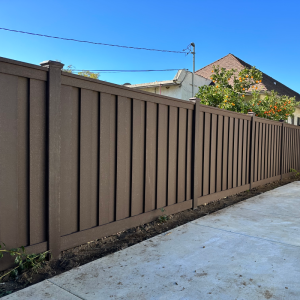
West Austin cedar fences have a distinctive sun exposure profile compared to most of Austin. The live oak canopy that covers significant portions of West Austin properties shades many fence sections for much of the day. These shaded sections experience less UV stress than their counterparts in the open suburban lots of North Austin and may extend the staining cycle by a year or more. The exposed sections of the same fence, running along boundaries where trees do not provide shade, deplete their stain protection at the standard Austin rate.
The practical implication is that West Austin cedar fences benefit from a staining assessment that walks the full fence line and evaluates each section’s exposure rather than applying a single schedule to the whole fence. The staining cycle is set by the most exposed section, but the assessment helps avoid over-staining shaded sections that are in better condition than the exposed ones.
Our guide on how long a wood fence lasts in Austin covers the relationship between staining frequency, sun exposure, and cedar longevity in Austin’s climate. For West Austin homeowners with live oak shade on significant portions of their fence, the guide provides useful context for calibrating a maintenance schedule that accounts for the specific conditions of their property. Our fence staining service covers West Austin cedar across all exposure conditions. Request a free estimate and we will assess your West Austin property, confirm your HOA requirements, and give you a complete written quote.