
At Legacy Fence Company, cedar privacy fencing is the dominant service in Travis Heights, Bouldin Creek, and the surrounding South Austin neighborhoods. These are older established communities with a distinctive character, and cedar fits that character the way no other fence material does. The natural wood grain, the honest simplicity of board-on-board construction, and the way cedar ages and develops patina over time suit the South Austin aesthetic in a specific way that vinyl and composite do not replicate.
The South Austin cedar fence owners we work with in these neighborhoods tend to have strong opinions about what they want. Cedar board-on-board at six feet is the standard, but South Austin homeowners are more likely than those in other parts of the city to have a specific preference about the gate design, the fence line placement, or the stain color. This guide covers what quality cedar installation looks like in South Austin and what homeowners here should know before hiring.
Here is what makes cedar fencing in Travis Heights and Bouldin Creek work well and what to look for in a cedar fence installation in this part of the city.
Why Cedar Works in South Austin’s Neighborhood Context
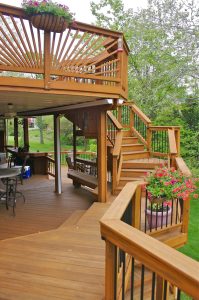
Travis Heights and Bouldin Creek have a residential character that developed organically over decades rather than through a planned development template. The houses range from 1920s bungalows and Craftsman cottages to post-war ranch homes and the contemporary renovations that have followed over the past twenty years. Cedar privacy fencing spans all of these architectural periods naturally because it is a material with genuine character rather than a manufactured substitute for it. A new cedar fence in South Austin reads as an appropriate continuation of the neighborhood’s visual language.
Cedar also ages well in the South Austin context. A cedar fence that has developed the silver-gray patina of unstained cedar actually suits some South Austin properties the way it suits very few suburban lots. Homeowners who choose not to stain are accepting a different aesthetic outcome, and in South Austin that choice can be intentional and coherent. We discuss staining preferences during the estimate and respect the homeowner’s preference for the finished look they want.
The material fits the neighborhood associations’ expectations throughout South Austin. Travis Heights, Bouldin Creek, and Barton Hills do not have formal HOA governance in most cases, which means material and style choices are more flexible than in governed communities. Cedar is consistently appropriate regardless of the specific address.
What Quality Cedar Installation Looks Like in South Austin
The most important variables in cedar fence quality in South Austin are post depth, post material, and board grade. These are the factors that determine how long the fence lasts and how much maintenance it needs during its service life. A cedar fence built on properly set pressure-treated posts with appropriate-grade cedar boards will last fifteen years or more with consistent staining. A fence built on undersized posts set at insufficient depth in South Austin clay will begin developing problems within five to eight years.
Post depth in South Austin follows the same standard as throughout Austin: a minimum of one-third of the post length plus six inches below grade. In Barton Hills and other hillier South Austin areas, limestone bedrock may be encountered close to the surface, which requires on-site adaptation during installation. We assess substrate conditions during the estimate for South Austin properties with known limestone exposure and plan the post installation approach accordingly.
Our wood fence installation service covers the full cedar privacy fence installation scope in South Austin, from post setting through board installation and gate hanging. We use pressure-treated posts for ground contact, appropriate-grade cedar boards for fence boards and rails, and galvanized hardware throughout for corrosion resistance in Austin’s humidity.
Cedar Staining in South Austin: Tree Cover and Timing
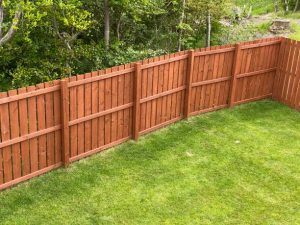
South Austin’s tree canopy creates variable staining conditions across the fence line for many properties in Travis Heights, Bouldin Creek, and Barton Hills. The live oaks, pecans, and other mature trees that are a defining feature of these neighborhoods shade fence sections that run alongside them, while other sections of the same fence may be in full sun. This creates a situation where different parts of the fence experience different UV stress and deplete their stain protection at different rates.
The practical approach is to stain on the schedule required by the most exposed section. If the south-facing section of the fence needs staining after two years, the whole fence gets stained on that cycle. Selectively staining only the exposed sections is not a practical maintenance approach for most homeowners. Our fence staining service covers South Austin cedar across the full range of shade and sun conditions.
Our guide on how long a wood fence lasts in Austin covers how staining frequency and product quality affect cedar fence longevity in Austin’s climate. The guide is particularly useful context for South Austin homeowners deciding on a maintenance plan for a new cedar fence. Request a free estimate and we will walk your South Austin property, assess the terrain and tree conditions, and give you a complete written quote for your cedar fence project.