
At Legacy Fence Company, commercial fence cost questions come with more variables than residential projects, and the range is wider. Material type, fence height, linear footage, gate configuration, and Austin-specific site conditions all affect the final number. Understanding what drives commercial fence pricing helps business owners and property managers evaluate quotes accurately and plan budgets that reflect the actual project scope.
For Austin TX businesses and property managers, commercial fencing decisions often come with a timeline constraint. A construction site needs perimeter containment before work starts. A new parking facility needs fencing before it opens. A property redevelopment may need an existing fence replaced before tenants move in. Planning the budget accurately from the start prevents delays.
Here is a breakdown of what drives commercial fence installation cost in Austin and how each variable affects the final number.
Material Type: The Primary Commercial Cost Driver
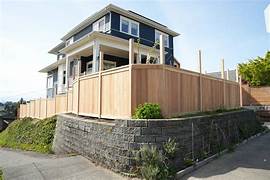
Chain link fencing is the most cost-effective commercial material in Austin and is the default choice for most parking lots, storage facilities, construction sites, and industrial applications. Commercial chain link uses heavier gauge wire than residential applications, which increases material cost but delivers greater durability and cut resistance. Height is a significant variable. Standard commercial chain link runs six to eight feet, and taller heights for higher-security applications increase material and post cost proportionally.
Ornamental aluminum and steel fencing costs more per linear foot than chain link but delivers a professional appearance appropriate for office parks, retail frontage, and institutional facilities. Ornamental fencing is priced at a meaningful premium over chain link and justified primarily by the aesthetic requirement. For applications where appearance matters and the property is visible from public right-of-way, ornamental is typically the appropriate choice. For back-of-house, utility, and industrial applications, chain link is almost always the better value.
Wood privacy fencing for commercial screening applications, vinyl commercial fencing, and welded wire security mesh each occupy specific niches in the Austin commercial fence market. Each has its own cost structure and appropriate application range. Our commercial fence installation service covers the full range of commercial materials and can help identify the right specification for your specific application.
Gate Systems and Their Effect on Commercial Fence Budget
Gate systems are often the most variable cost component in a commercial fence project. A simple manual swing gate on a small commercial perimeter adds a relatively modest amount to the total project cost. An automated rolling gate with keypad access, safety loops, and backup power for a high-traffic commercial entrance can add significantly to the budget. The gate width, type, and access control specifications are the primary drivers.
Our gate installation service handles commercial gate configurations across the full range from simple swing gates to automated rolling systems with integrated access control. Gate hardware for commercial applications is more substantial and more expensive than residential gate hardware, and this cost difference should be accounted for in any commercial fence budget. We provide gate systems as a separate line item in every commercial estimate so the cost is visible and comparable.
Our guide on fence permits in Austin covers the general permit framework. For commercial projects, permits are more commonly required and the review process typically runs through commercial development review rather than the residential permit channel. Permit fees for commercial projects are also generally higher than residential permit fees, and we factor these into every commercial estimate when applicable.
Austin-Specific Commercial Fence Cost Factors
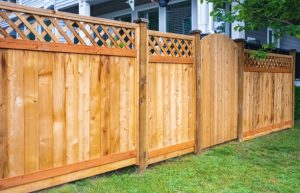
Austin’s black expansive clay soil affects commercial fence post costs the same way it affects residential ones. Posts need to go deeper in Austin clay than in regions with more stable soil, which means more concrete per post and more labor per post. On commercial projects with large post counts, this adds up. For commercial applications where the substrate around the fence line involves concrete, limestone, or hardscaping, additional installation complexity can affect cost.
Site access and terrain are two additional Austin-specific variables. Commercial properties in Austin vary significantly in their site conditions. A flat North Austin commercial lot with easy perimeter access is straightforward to work on. A commercial property in the hilly terrain of west or southwest Austin, or one with significant existing hardscaping, structures, or utility infrastructure near the fence line, requires more planning and sometimes more complex installation approaches. We assess site conditions during the estimate to factor these variables in accurately.
Austin labor rates are another market-specific factor. National cost estimates for commercial fencing are based on national labor averages that do not reflect Austin-specific rates. We price every commercial project based on actual Austin market conditions, which produces more accurate estimates than using national benchmarks.
How to Get an Accurate Commercial Fence Quote in Austin
Commercial fence quotes require a site visit. The perimeter length, substrate conditions, grade changes, gate placement, utility locations, and permit implications all affect the final cost in ways that cannot be assessed from a satellite view or a phone call. Any per-linear-foot estimate given without visiting the site is based on assumptions that may differ significantly from your actual property.
A complete commercial fence estimate should itemize material type and gauge, post specifications, linear footage, gate systems as a separate line item, permit fees where applicable, and any site-specific installation considerations. An estimate that does not show these details separately makes accurate comparison between contractors difficult and can hide scope differences that explain price variation.
Request a free commercial fence estimate and we will visit your property, walk the perimeter, assess all site variables, and provide a written, itemized quote for your specific project.