
At Legacy Fence Company, composite fence installation has grown into one of our most requested services over the past several years. Austin homeowners are choosing composite because it solves the maintenance problem that comes with cedar in a high-UV, high-heat environment without giving up the natural wood aesthetic entirely. If you have been exploring fencing options and composite has come up, this guide covers what it actually is, how it performs in Austin’s specific climate, what styles are available, and what the installation process involves.
Composite fencing is growing consistently across the Austin TX neighborhoods we serve because the trade-offs make practical sense in this climate. Cedar requires periodic staining to hold up in Austin’s sun, and without it, degradation happens faster than most homeowners expect. Composite largely eliminates that maintenance cycle while keeping the appearance close enough to cedar that it satisfies most HOA requirements and homeowner preferences.
If you are still in the early stages of comparing materials, our guide on the pros and cons of composite fencing for Texas homes goes deeper on the full trade-off picture including cost, maintenance, and climate performance.
What Composite Fencing Is and How It Is Made
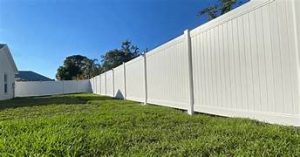
Composite fencing is made from a blend of wood fiber and recycled plastic. The wood fiber provides structure and texture that gives composite its natural appearance. The plastic component provides moisture resistance, UV protection, and structural stability. The ratio varies by manufacturer and product tier. Higher-end composite products have a higher plastic content, which improves UV resistance and reduces moisture absorption. Lower-end products with more wood fiber content can perform more like wood over time, with more risk of surface degradation in Austin’s climate.
The important distinction is between composite and vinyl. Vinyl fencing is made entirely from PVC with no wood content. It looks and performs differently from composite. Vinyl has a more manufactured appearance at close range. Composite has a more natural wood texture and appearance because of the wood fiber content. They are two different products with different aesthetics and different price points, and the choice between them comes down to appearance preference and budget.
Composite fencing posts are typically wood or metal, not composite, for structural reasons. The composite material is used for boards, rails, and pickets. This means the post-setting process in Austin clay soil follows the same principles as any other fence material: adequate depth, proper concrete work, and accounting for the expansion and contraction cycle that Austin’s clay goes through seasonally.
Composite Fence Styles Available in Austin
Composite fencing is available in most of the same styles as cedar. Full privacy composite fencing, using solid boards or panels with no gaps, is the most commonly installed style in Austin residential neighborhoods. It delivers the same privacy as a cedar board-on-board fence without the maintenance requirements. Horizontal composite fencing has grown particularly popular in East Austin, Mueller, and Central East Austin neighborhoods where the contemporary architectural character calls for a more modern fence profile. Composite handles the horizontal orientation well because it does not warp or sag the way horizontal cedar can in Austin’s heat.
Semi-privacy composite, which has small gaps between boards, and composite picket fencing are also available for applications where full privacy is less of a priority. Color selection in composite fencing has expanded in recent years. Earth tones in cedar brown and weathered gray finishes dominate the Austin market because they complement the natural landscape and architecture of most neighborhoods.
Always verify that your preferred color and style are available from the specific manufacturer your contractor works with before finalizing your selection.
How Composite Fencing Performs in Austin’s Climate
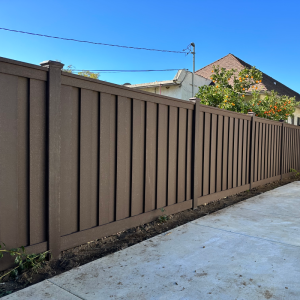
Austin’s climate puts specific stresses on fence materials. Intense UV exposure during the summer, wide temperature swings between seasons, occasional freeze-thaw cycles in winter, and significant moisture variation between wet springs and dry summers all affect how materials hold up over time. Quality composite fencing is engineered for high UV and temperature variation environments. The plastic component is UV-stabilized in better products, which prevents the surface fading and degradation that affects both cedar and lower-quality composite over time.
Composite does not warp, split, or absorb moisture the way wood does, which makes it resilient in Austin’s alternating wet and dry seasons. On south and west-facing fence lines in Austin, where sun exposure is highest, composite holds its appearance and structure notably longer than cedar without ongoing staining. The performance difference between entry-level and premium composite is significant, and we work with manufacturers whose products have documented long-term performance in high-heat, high-UV Southern climates.
Our guide on what type of fence is best for Texas weather covers the full material comparison including cedar, vinyl, and composite performance across Austin’s specific climate conditions.
What the Composite Fence Installation Process Looks Like
Composite fence installation follows the same fundamental process as other fence types. The project starts with a site estimate where we assess your property, review your HOA requirements, and determine the appropriate post depth for your specific soil conditions. Austin clay soil requires the same attention to post depth and concrete work for composite as for cedar or vinyl. The composite material used for boards and rails does not change the foundation requirements.
HOA approval is required before installation begins if your property is in a governed community. Some Austin HOAs have not yet updated their guidelines to include composite as an approved material, which means you may need to work with your HOA to get specific approval. We have navigated this process for homeowners before and can advise on how to present a composite fence proposal to a community that has traditionally specified cedar or vinyl. In many cases, composite can satisfy the aesthetic intent of cedar-only guidelines because of its natural wood appearance.
The best first step is a site visit so we can assess your property, review your HOA requirements, and give you accurate pricing. Request a free fence estimate and we will walk through all the details on your specific lot.