
At Legacy Fence Company, fence installation in Central Austin involves a set of challenges that do not exist to the same degree in newer parts of the city. The established neighborhoods between MoPac and I-35, from Lady Bird Lake north through Hyde Park and Allandale, have mature tree canopies with extensive root systems, grade changes from the creek corridors that cross the area, aging housing stock with older existing fences, and in some sections, historic overlay review requirements. Getting a fence project right in Central Austin requires knowing how to navigate each of these variables before installation begins.
The Central Austin neighborhoods we serve, including Hyde Park, Allandale, Rosedale, Brentwood, Crestview, and Bryker Woods, represent some of the oldest residential properties we work on in Austin. The housing stock dates from the 1920s through the 1960s in most of these areas, and the fence installation challenges reflect that age and the mature landscape that comes with it.
Here is what shapes fence installation in Central Austin and what homeowners in this part of the city need to know before starting a project.
Navigating Mature Trees in Central Austin
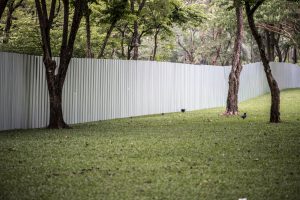
Central Austin’s tree canopy is one of the defining features of the neighborhood character. The live oaks, Spanish oaks, cedar elms, and pecans that line Central Austin streets and fill its backyards also have root systems that extend well beyond the drip line of the tree. These surface and near-surface roots frequently intersect planned fence post locations. In newer Austin neighborhoods, tree root conflicts are occasional. In Central Austin, they are routine.
When a root system is encountered at a planned post location, the decision is made on-site with the homeowner. Options depend on the root size and proximity to the tree trunk. A small lateral root at sufficient distance from the trunk may be cut cleanly without meaningful impact on tree health. A significant structural root close to the trunk requires a different approach: moving the post location slightly, spanning the section with a longer rail that skips the root, or using a surface-mounted post bracket anchored to a concrete pad rather than a ground-penetrating post. We do not cut roots without discussing the implications with the homeowner and assessing the root significance first.
Our guide on preparing your yard for fence installation in Austin covers what homeowners can do before the installation crew arrives, including flagging any known root systems or underground elements near the planned fence line. For Central Austin properties with significant tree coverage, a pre-installation conversation about root conflict risk is part of every estimate visit.
Grade Changes and Creek Corridor Properties in Central Austin
Central Austin is not as flat as most of North Austin. The Shoal Creek and Waller Creek corridors that run through the area create grade changes in adjacent properties, and lots in Allandale near Shoal Creek, in Hyde Park near Waller Creek, and in Brentwood near the Shoal Creek tributary all commonly have meaningful slope along the fence line. Sloped lots require stepped or racked fence construction rather than a fence that follows a single level run.
Our fence installation service handles stepped and racked fence construction on sloped Central Austin lots. The approach depends on the degree and consistency of the slope. Gradual consistent grade changes work well with racked fencing, where the fence panel follows the grade line continuously. More abrupt grade changes work better with stepped fencing, where the fence moves in level horizontal increments that step down with the grade. We assess terrain during the estimate and recommend the appropriate approach for the specific grade conditions.
Properties near creek corridors also need to account for setback requirements from the waterway. Shoal Creek and Waller Creek both have established setback zones that restrict where structures, including fences, can be placed relative to the water. We check applicable waterway setbacks during the estimate for properties in these zones.
Historic Overlay Considerations in Central Austin
Hyde Park and Old Enfield are the most established historic overlay areas in Central Austin, and both have review considerations that can affect fence installations visible from the street. The Hyde Park historic district has specific design guidelines for new construction and modifications to existing structures in the district. Fence installations on street-facing elevations may fall under these guidelines depending on the specific property location and fence design.
Our guide on fence permits in Austin covers the city’s general permit framework. For properties in Central Austin overlay districts, the permit and review process may include a historic review step that does not apply to standard Austin residential fence projects. We check applicable overlay and review requirements for every Central Austin property during the estimate process before recommending a fence design or material.
For most backyard fence installations in Central Austin, historic overlay requirements do not apply. The considerations primarily affect street-facing fence elements on properties within the designated district boundaries. We confirm the applicability for your specific property during the estimate.
What to Expect from Fence Installation on Older Central Austin Properties
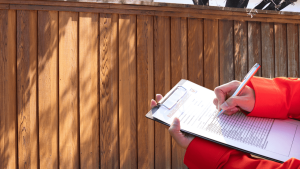
The housing stock in Central Austin’s established neighborhoods dates primarily from the 1920s through the 1960s. These properties often have existing cedar fences from multiple past installations, irregular lot lines that reflect the original subdivision plats from decades ago, and site conditions that are more complex than what you find on newer suburban lots. Setting posts on these properties requires more careful site assessment than on a flat, newly developed lot.
Older properties in Hyde Park and Allandale commonly have utility infrastructure that was installed decades ago and may not be accurately reflected in current utility maps. We call 811 for utility locates on every project, but on older Central Austin properties, we also discuss any known utility locations with the homeowner before post setting begins. Underground utilities on older properties sometimes run in locations that were logical in the 1940s but are not where current utility routing standards would place them.
Request a free estimate for your Central Austin property and we will walk the fence line, assess the root and terrain conditions, check any overlay requirements, and give you a complete written scope for the project.