
At Legacy Fence Company, fence installation in Central East Austin shares characteristics with East Austin infill work but has its own distinct set of neighborhood conditions. The grid street pattern with rear alleys, the mix of older original housing stock alongside newer infill construction, the minimal HOA governance that gives homeowners more material and style flexibility, and the contemporary aesthetic preference that has taken hold across much of this part of the city all shape what fence projects look like here.
The Central East Austin properties we work on in Holly, Govalle, East Cesar Chavez’s eastern sections, and the Montopolis corridor present a consistent set of site variables. This guide covers what shapes fence installation in Central East Austin and what homeowners need to know before starting a project.
Here is what is distinctive about fence work in this part of the city.
Dense Lots and Shared Property Lines in Central East Austin

Central East Austin’s residential blocks are built on the original city grid pattern that predates the suburban development model. Lots are smaller and more uniformly rectangular than in the curvilinear suburban subdivisions of North and Southeast Austin. The density means fence lines frequently run directly along shared property boundaries, and both sides of the fence are typically occupied. Working on a shared fence line in Central East Austin requires awareness of both neighbors’ interests and sometimes coordination with the adjacent property owner.
The proximity of properties in this part of the city also means that construction activity on any given lot has a visible effect on neighbors. When infill development or a new construction project occupies an adjacent lot, the construction activity including excavation, concrete work, and heavy equipment movement can affect fence posts on neighboring properties. We assess post stability on Central East Austin properties where adjacent construction is active, and we check whether any post movement is attributable to construction vibration when the context suggests it.
Our fence installation service covers Central East Austin across all lot types and fence line configurations, including the shared property line situations that are more common in this dense grid neighborhood pattern than in suburban areas.
Alley Access and Gate Requirements in Central East Austin
The rear alley system is a defining feature of the original Austin city grid that runs through much of Central East Austin. Many residential lots in Holly, Govalle, and the Montopolis area have a rear alley that provides vehicle and service access to the back of the property. Fence projects on these lots need to account for the alley gate as a functional component of the fence system.
Alley gates in Central East Austin need to accommodate the intended use: vehicle access for parking, trash can roll-out for alley pickup, service access for contractors, or some combination. Gate width is determined by the widest use case. A gate that serves pedestrian access only can be a standard walk-through width. A gate that needs to accommodate a vehicle or a large trash container needs to be wider, with posts set at appropriate depth for the gate weight and swing clearance planned within the alley right-of-way.
Alley right-of-way in Austin is city property, and gates that swing outward into the alley may require coordination with the city depending on how far the gate extends into the alley during operation. We assess alley gate clearance during the estimate for every Central East Austin property with alley access to ensure the gate design works within the available space.
Fence Style in Central East Austin: The Contemporary Shift
Central East Austin has followed the same contemporary style shift that has reshaped much of East Austin over the past decade. Horizontal cedar fencing has become the standard style on new construction and renovated properties throughout Holly, Govalle, and the infill development along the Airport Boulevard and East Riverside corridors. The clean parallel-line aesthetic of horizontal cedar matches the design language of the contemporary townhomes, single-family infill, and renovated bungalows that are reshaping Central East Austin.
The relative absence of HOA governance throughout most of Central East Austin gives homeowners more latitude in style selection than is available in the governed communities of North or Southeast Austin. A homeowner in Central East Austin who wants horizontal cedar, a different fence height, or a custom gate design has the regulatory flexibility to pursue it. The only binding framework is City of Austin code, which applies to height, setback, and permit requirements but does not dictate style or material for standard residential fences.
Our guide on preparing your yard for fence installation in Austin covers what to address before an installation crew arrives. For Central East Austin homeowners with alley lots, the guide includes useful information about alley clearance and gate planning that is specifically relevant to this neighborhood pattern. Request a free estimate for your Central East Austin property and we will assess the site conditions, discuss your style preferences, and provide a complete written quote.
Soil Conditions and Post Installation in Central East Austin
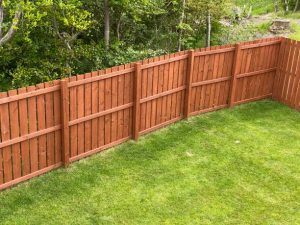
Central East Austin sits on Austin’s expansive black clay throughout the area. The clay soil conditions are consistent with the rest of East Austin and central Austin: posts set at adequate depth with thorough concrete encapsulation hold up significantly better over time than posts set shallower. The clay expands when wet and contracts as it dries, and this cycle works on posts that are not anchored deeply enough to resist the movement.
The grid street pattern of Central East Austin sometimes means that utility infrastructure runs in unexpected locations relative to the fence line. The original utility layouts from decades of city development are not always accurately reflected in current utility maps on properties that have been developed and redeveloped multiple times. We call 811 for utility locates on every Central East Austin project and discuss any known underground utility locations with the homeowner before post setting begins.
Our guide on fence permits in Austin covers when permits are required for fence installation in Austin. For standard residential privacy fences in Central East Austin, most projects do not require a city permit unless they exceed eight feet in height or are located in a designated flood zone area near the waterway corridors in this part of the city.