
At Legacy Fence Company, fence installation in Downtown Austin is a different category of work from residential fence projects in other parts of the city. The downtown core is a commercial and mixed-use environment with a different set of site conditions, permit requirements, and project types than the residential neighborhoods that make up most of our work. Understanding what fence installation actually looks like in this context helps property managers, developers, and commercial tenants approach downtown fence projects with the right expectations.
The downtown and urban Austin properties where fence work is most common are commercial properties, construction sites, mixed-use developments, and properties on the edges of the downtown core where the commercial and residential zones meet. Here is what shapes fence work in this part of the city.
This guide covers the most common downtown fence project types, what the permitting environment looks like, and what makes urban Austin fence installation different from suburban work.
What Fence Work Actually Looks Like in Downtown Austin
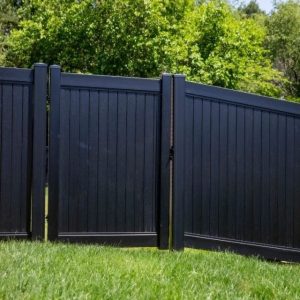
Traditional residential privacy fencing is rare in the downtown core. The land uses, lot sizes, and building types that define downtown Austin do not produce the suburban backyard fence project that is the most common work in North, South, and East Austin. What downtown Austin produces instead is a specific set of commercial fence applications: construction site perimeter fencing for the continuous development activity in the area, parking lot perimeter fencing for surface lots and structured parking exits, dumpster enclosures on commercial properties where code requires screening of waste containers, and ornamental or security fencing on commercial properties with street frontage.
Our commercial fence installation service covers all of these applications. Construction site fencing in downtown Austin is particularly active given the consistent building activity in the area. We install both temporary panel fence systems for active construction sites and permanent perimeter installations for completed commercial properties. The access constraints and coordination requirements of downtown installation are familiar territory for our commercial fence crews.
Properties on the edges of downtown, in East Cesar Chavez, the Rainey Street area, and along the South First Street corridor where residential and commercial zones meet, occasionally have traditional residential fence applications. These edge-of-downtown properties often have the same HOA overlay review considerations as their respective residential neighborhoods while also being adjacent to commercial uses that affect the appropriate fence specification.
Permitting in Downtown Austin’s Commercial Environment
Commercial fence projects in Downtown Austin trigger permit requirements more frequently than residential fence projects in other parts of the city. The commercial zoning classification, the proximity to public right-of-way, the presence of historic overlay districts, and the higher scrutiny that construction activity in the downtown core receives from the city all make permit requirements more common on downtown fence projects than on a typical suburban residential project.
Historic overlay considerations are a specific permit-adjacent factor in several downtown zones. The Sixth Street entertainment district and Congress Avenue corridor have design standards that affect what construction and installation work is appropriate on adjacent properties. Fence and enclosure installations that are visible from these corridors may require review under the applicable design standards. We check applicable permit and overlay requirements for every downtown project during the estimate process.
Our guide on fence permits in Austin covers the city’s general permit framework. Downtown commercial projects typically run through the commercial permit review process rather than the residential permit track, which has different timelines and documentation requirements. Starting permit applications early is critical on downtown projects where the permit timeline can affect construction schedules.
Site Access and Coordination in Downtown Austin
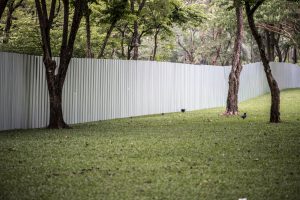
Downtown Austin site access for fence installation is fundamentally different from suburban site access. Tight lots between buildings, active pedestrian traffic on adjacent sidewalks, delivery schedules for adjacent businesses, and limited staging areas for materials and equipment all create coordination requirements that do not exist in a standard residential installation. A downtown fence project often requires more advance coordination with the property owner, the adjacent tenants, and sometimes the city for work that affects sidewalks or public right-of-way.
Construction site fencing in downtown requires coordination with the general contractor on site, the city’s right-of-way management process, and adjacent property owners who may be affected by the installation. Temporary sidewalk closures or pedestrian detours around installation work require notification and sometimes permits separate from the fence permit itself.
Despite these coordination requirements, downtown Austin fence projects are manageable with proper planning. The key is identifying all the coordination requirements during the estimate process rather than discovering them during installation. We conduct downtown estimate visits with commercial project experience and ask the right questions about access, adjacent tenants, city right-of-way constraints, and construction schedule requirements before any work is planned. Request a free commercial fence estimate for your downtown Austin property and we will assess the site conditions and give you a complete picture of what your project involves.