
At Legacy Fence Company, North Austin is one of our most active service areas. The part of the city north of the US 183 and Domain corridor has a distinctive mix of housing eras, from established 1980s neighborhoods like Wells Branch to newer subdivisions along Parmer Lane where HOA requirements are active and many lots came from the builder without a fence. That mix produces a range of project types, and understanding what is common in each part of North Austin helps homeowners know what to expect.
Across our coverage across Austin TX, North Austin represents a significant share of our installation and repair volume. The combination of aging cedar fences in older sections and first-time installations in newer developments keeps this part of the city consistently active.
Here is what shapes fence work in North Austin and how each variable affects your specific project.
What Makes North Austin Different for Fence Installation

North Austin’s defining characteristic for fence work is the range of housing ages within a relatively compact geographic area. The established 1980s and 1990s neighborhoods like Wells Branch, Rundberg, Gracywoods, and Georgian Acres have housing stock that is now thirty to forty years old, and the original cedar fences installed alongside those homes are at or past the end of their useful life. Replacement projects dominate the work in these older North Austin neighborhoods.
Moving further north toward the Parmer Lane corridor, the housing stock transitions to 2000s and 2010s construction in communities like Tech Ridge, Scofield Farms, and the subdivisions surrounding the Domain. Many of these properties are first-time installations. The builder left the lot unfenced, and the homeowner is now adding a fence for the first time. These projects are typically cleaner to execute because there is no existing fence to remove and the lot conditions are well-documented.
The boundary between Austin’s jurisdiction and Cedar Park near the northwest portion of North Austin adds a jurisdictional consideration. Properties in communities like Anderson Mill may fall under Cedar Park’s building code rather than Austin’s, which affects permit requirements. We confirm jurisdiction for every North Austin project during the estimate.
HOA Landscape in North Austin
HOA governance in North Austin is uneven. The older established neighborhoods like Rundberg, North Loop, and the residential sections near Rundberg were developed before HOA governance was standard, and many properties in those areas have no community association at all. Homeowners in these sections have more flexibility in fence choice and style than in governed communities, though Austin city codes still apply.
The newer subdivisions along Parmer Lane and near the Domain are a different situation. Communities like Scofield Farms, Tech Ridge, and the newer developments in the Avery Ranch direction have active HOAs with detailed construction guidelines. Fence submissions in these communities require applications with material specifications, height documentation, and sometimes plot plans. Cedar and vinyl are the most commonly approved materials. We prepare HOA submissions for every North Austin project that requires them and have experience with the specific requirements of the more active community associations in this part of the city.
Our guide on fence permits in Austin covers the city’s permit requirements, which apply throughout North Austin for fences over eight feet and in certain flood zone areas. HOA approval is a separate requirement from city permits and should be confirmed before any work is scheduled.
Common Fence Projects We Handle in North Austin
Replacement projects dominate the work in established North Austin neighborhoods. Cedar fences that were installed in the late 1980s and 1990s are now showing the combined effects of Austin clay soil movement on posts and UV exposure on boards. Many of these fences have multiple leaning posts, widespread board deterioration, and structural issues that have progressed beyond what targeted repair can address economically. Full replacement is typically the right call on fences of this age when multiple posts have failed.
Our fence installation service covers the full replacement scope from old fence removal through new installation. On replacement projects in North Austin, we assess the existing fence condition during the estimate, confirm whether repair or replacement is more appropriate, and provide a complete written scope before any work begins.
First-time installations in newer North Austin subdivisions are the other major project type. These projects typically involve cedar or vinyl on previously unfenced lots, and the HOA submission process is a central part of the timeline. We handle the HOA application preparation as part of the project.
Soil and Terrain in North Austin
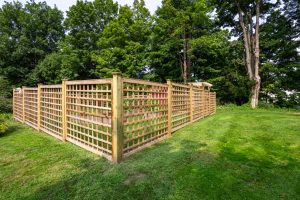
Austin’s expansive black clay soil is consistent throughout North Austin, from the established residential areas near Rundberg to the newer subdivisions along Parmer Lane. The clay expands significantly when it absorbs moisture during Austin’s spring rain season and contracts as it dries through summer. This seasonal movement is the primary cause of post shifting and leaning in North Austin fence installations that were set at insufficient depth.
The terrain in most of North Austin is relatively flat compared to the hilly terrain of West and South Austin, which simplifies fence installation from a grading perspective. Flat terrain means fewer stepped fence sections and more straightforward post setting. Some North Austin properties near creek corridors, including sections near Walnut Creek and Little Walnut Creek, have grade changes along the fence line that require stepped or racked fence construction. We assess terrain during the estimate and plan accordingly.
Our guide on preparing your yard for fence installation covers what to do before the installation crew arrives. For North Austin homeowners with existing older fences to replace, the guide includes useful information on what to clear and document before teardown begins. Request a free estimate and we will walk your specific property and give you a complete picture of what your project involves.