
At Legacy Fence Company, Southeast Austin fence installation presents a specific combination of variables that distinguishes it from other parts of the city. The FEMA flood zones along the Onion Creek corridor, the active HOA communities that govern many of the newer subdivisions in this area, the storm exposure that makes fence repair a frequent service call, and the clay soil conditions consistent with the rest of Austin all shape what fence projects look like here.
The Southeast Austin homeowners and neighbors we work with in the Onion Creek area, McKinney Falls, Dove Springs, and the subdivisions along William Cannon and Slaughter Lane approach fence projects with a specific set of concerns that are particular to this part of the city. Here is what shapes fence installation in Southeast Austin and what homeowners need to know before starting a project.
This guide covers flood zone considerations, HOA requirements, storm preparation, and what the installation process looks like on Southeast Austin properties.
Flood Zone Considerations Near Onion Creek
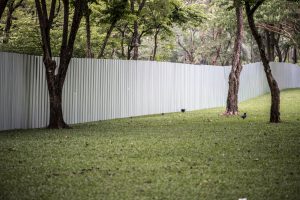
The Onion Creek corridor is the defining geographic feature that creates the most distinctive fence installation variable in Southeast Austin. Onion Creek has a history of significant flooding events, and a substantial number of properties in the neighborhoods adjacent to the creek are designated in FEMA flood zones. Fence placement and design on properties in FEMA flood zone classifications is subject to regulations that do not apply to standard residential lots.
In some flood zone classifications, solid privacy fences are restricted because solid fence panels obstruct water flow and can increase flood damage to adjacent properties during flood events. The specific restriction depends on the flood zone classification of the property. Flood Zone AE, which covers much of the Onion Creek floodplain in Southeast Austin, has the most specific requirements. Properties in Flood Zone X, which borders the floodplain, have fewer restrictions. We check the applicable flood zone classification for every Southeast Austin property near Onion Creek or other waterways during the estimate.
Our guide on fence permits in Austin covers the general Austin permit framework. For Southeast Austin properties in flood zones, the permit process includes flood zone compliance review in addition to standard fence permit requirements. Starting this process early is important because flood zone compliance review can add to the permit timeline.
HOA Landscape in Southeast Austin
Southeast Austin has a higher density of active HOA communities relative to its size than most other parts of Austin, driven by the wave of planned subdivision development that occurred in this area from the 1990s through the 2010s. The communities along William Cannon, Slaughter Lane, and the Onion Creek area were developed as planned communities with formal HOA governance structures, and those structures remain active.
HOA fence requirements in Southeast Austin’s planned communities typically cover material, style, height, and sometimes color. Cedar and vinyl are the most commonly approved materials across Southeast Austin HOAs. Many of these communities specify a standard fence height and a standard style, such as board-on-board cedar or horizontal-rail vinyl, that must be matched by any new fence installation. We review HOA requirements for every Southeast Austin project during the estimate and handle the HOA application process as part of the project scope.
Our fence installation service covers all Southeast Austin HOA-approved configurations. We have experience with the application requirements of the most active Southeast Austin community associations and can prepare submissions that address the specific documentation requirements of each community.
Storm Preparation and Fence Selection in Southeast Austin
Southeast Austin’s exposure to spring and fall storm systems is consistent with the rest of Austin, but properties near Onion Creek face an additional risk from the flooding events that have repeatedly affected this corridor. A fence that is damaged by storm wind is a repair issue. A fence that is also undermined by flood water or impacted by flood debris is a more complex repair scenario. Understanding how fence material and installation quality affect storm and flood resilience is relevant for homeowners in flood-adjacent areas of Southeast Austin.
Post installation quality is the most important factor in storm resilience for any fence. Posts set at adequate depth with proper concrete work are significantly more resistant to wind loading than posts set shallower. In flood-adjacent areas, post concrete encapsulation also provides resistance to the soil saturation that flooding produces, which can soften post bases and accelerate movement in fences that were not originally set with flood conditions in mind.
For properties in the Onion Creek flood zone where solid privacy fences are restricted, vinyl-coated chain link or picket-style fences with significant gaps are often the practical compliant alternative. These fence types allow water to flow through during flood events rather than creating a dam effect. We discuss the flood zone requirements and the fence options that satisfy them during the estimate for every flood-adjacent Southeast Austin property.
Soil and Installation Conditions in Southeast Austin
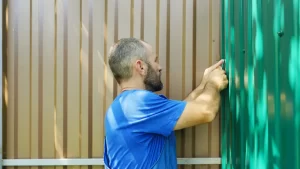
Southeast Austin sits on the same expansive black clay that underlies most of Austin east of MoPac. Post installation requires the same depth and concrete standards as elsewhere in the city. The relatively flat terrain throughout most of Southeast Austin simplifies fence installation from a grading perspective compared to West or South Austin, and most Southeast Austin fence projects do not require stepped or racked construction.
Low-lying areas near creek corridors in Southeast Austin experience slower drainage than properties with more grade. In these areas, post bases may be in contact with standing water after significant rainfall. This is particularly relevant for properties in or near the Onion Creek floodplain, where post base moisture conditions after flood events accelerate deterioration at the ground line on posts that are not adequately protected. We assess drainage conditions during the estimate for Southeast Austin properties near waterways.
Our guide on preparing your yard for fence installation in Austin covers what to address before installation day. For Southeast Austin homeowners near the Onion Creek corridor, flagging any known flood zone restrictions or drainage issues during the estimate conversation helps us plan the installation approach appropriately. Request a free estimate and we will walk your property, confirm the flood zone and HOA requirements, and give you a complete written quote.