
At Legacy Fence Company, fence replacement in Central Austin is a distinctive type of project compared to replacement in newer parts of the city. The older lot conditions, mature root systems, and aging cedar stock throughout Hyde Park, Allandale, and Rosedale create a set of site variables that require more careful planning than a replacement project on a flat suburban lot with no significant tree coverage.
The fence replacement work we handle across Central Austin consistently involves the same combination of factors: cedar that has aged past the point where repair is cost-effective, post removal complicated by root growth around concrete footings over the years, and new post installation that must account for the same root and grade conditions that affected the previous fence. Here is what homeowners in Central Austin need to know before starting a replacement project.
This guide covers old fence removal in Central Austin specifically, material choices at replacement, and what the new installation process looks like on older lots.
Old Fence Removal in Central Austin: Root Conditions Matter
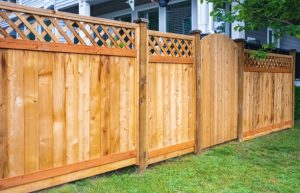
Old fence removal in Central Austin is more complex than in newer neighborhoods primarily because of what has grown around the post concrete footings over the years. A fence post set in concrete thirty years ago now has root systems from adjacent trees that have grown around, under, and sometimes through the concrete footing. Extracting the footing cleanly without damaging significant tree roots requires assessment of each post location before removal begins.
Small lateral roots that have grown into the footing can usually be cut cleanly at the footing boundary without meaningful impact on tree health. Larger structural roots that have grown extensively around the concrete require a different approach. In some cases, we excavate carefully by hand around the footing rather than using mechanical extraction, which preserves the root while allowing the footing to be removed. In others, the footing is left in place and the new post is located slightly away from the old position to avoid the root concentration.
Our guide on how to fix a leaning fence in Austin clay soil provides useful context for understanding why Central Austin fence posts fail over time and what the right installation approach for the replacement posts looks like. Getting the new post depth and concrete work right on the replacement fence is the most important factor in extending the service life of the new installation.
Choosing Replacement Material in Central Austin
Fence replacement is the natural opportunity to reconsider material choice. If the previous cedar fence was consistently maintained and lasted fifteen or more years, cedar is a proven fit for your property’s conditions and replacing like-for-like is a sound decision. If the previous cedar fence required more maintenance than you wanted, or if it deteriorated faster than expected because maintenance was inconsistent, replacement is the right moment to consider whether a lower-maintenance material is a better fit.
Vinyl and composite both perform well in Austin’s climate and are increasingly accepted in Central Austin’s established neighborhoods. Vinyl is the lower-maintenance option at a moderate cost premium over cedar. Composite offers a more natural wood appearance with similar low-maintenance performance. Both require the same post installation standards as cedar in Austin clay soil. The material choice affects the fence boards and rails, not the foundation approach.
Our fence replacement service covers all material options for Central Austin replacement projects. We walk through the options and their respective trade-offs during the estimate visit so the material decision is well-informed before the project begins.
Historic Overlay Considerations for Fence Replacement in Central Austin
The Hyde Park historic district and Old Enfield have design considerations that apply to modifications visible from the public right-of-way. For most backyard fence replacement projects in Central Austin, historic overlay requirements do not apply. For street-facing fence elements on properties within the designated district boundaries, the specific design requirements deserve a check before committing to a fence style or material.
The practical implication for most Central Austin homeowners is that backyard replacement in these areas proceeds without additional review requirements. Front yard fence modifications, and occasionally side yard fence sections visible from the street on corner lots, may need to be assessed against the applicable design guidelines. We check these requirements during the estimate for every Central Austin project in or near overlay areas.
Our guide on fence repair vs replacement in Austin covers the decision framework for when replacement makes more sense than continued repair investment, which is a common question on Central Austin’s older fence stock.
New Post Installation After Replacement in Central Austin
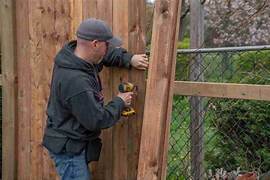
After old fence removal, new post installation on a Central Austin replacement project follows the same standards as any new fence installation in Austin clay soil, with additional attention to root avoidance. We assess the root conditions at each planned post location before digging begins. Where roots are present, we adjust the post location as needed to avoid significant root systems.
New posts are set at adequate depth for Austin clay soil with thorough concrete encapsulation. For replacement projects, we use the opportunity to correct any post depth issues from the original installation. Many Central Austin fences that are being replaced had posts that were set at insufficient depth for Austin clay, which contributed to the post failures that are now driving the replacement. Setting the new posts correctly gives the replacement fence a substantially longer service life.
Request a free replacement estimate and we will walk your Central Austin property, assess the root and grade conditions, check any overlay requirements, and give you a complete written scope for the removal and new installation.