
At Legacy Fence Company, fence staining and maintenance in Central East Austin covers two distinct situations that coexist in this rapidly changing neighborhood. The original housing stock throughout Holly, Govalle, and Montopolis has older vertical cedar that may be at or approaching the staining threshold, while the wave of infill construction and renovation in this area has installed significant amounts of newer horizontal cedar that is still relatively fresh but needs its maintenance schedule established from the start.
The Central East Austin staining work we handle consistently reinforces the same message: newer cedar still needs regular staining, and horizontal cedar needs it as much as vertical board-on-board even though it often looks better longer because fresh wood shows weathering more gradually. Here is what fence staining and maintenance look like for both fence types in Central East Austin.
This guide covers the specific conditions that shape staining needs in this neighborhood and what a quality maintenance approach looks like.
UV Exposure in Central East Austin: Less Canopy Than Older Neighborhoods
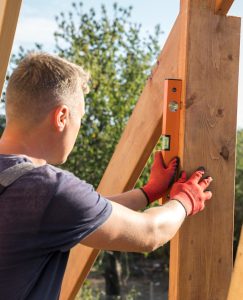
Central East Austin lacks the established tree canopy that provides significant shade to fence lines in neighborhoods like Hyde Park, Allandale, Tarrytown, and Travis Heights. The infill development pattern that has reshaped much of this part of Austin has not yet produced the canopy coverage that takes decades to develop. Many Central East Austin fence lines, particularly those running along the south and west faces of properties, receive substantially more direct sun than fence lines in more established Austin neighborhoods.
More direct sun exposure means cedar stain depletes faster. The UV inhibitors in quality cedar stain are consumed at a rate proportional to the UV load the stain is managing. On a fully exposed south-facing fence line in Central East Austin, the two-year end of the two-to-three-year staining cycle is the appropriate default rather than the three-year end. Following a three-year cycle on a fully exposed Central East Austin cedar fence leaves the wood without adequate protection during the third year, which is when UV damage accelerates and gray oxidation progresses most quickly.
Our guide on what type of fence is best for Texas weather covers how UV exposure affects cedar and other fence materials in Austin’s climate. For Central East Austin homeowners, understanding where your specific fence line falls on the shade-to-sun spectrum is the starting point for setting the right maintenance schedule.
Staining Horizontal Cedar in Central East Austin
The newer horizontal cedar that dominates new construction and renovated properties throughout Central East Austin requires the same staining approach as vertical board-on-board cedar. The wood is cedar, the UV exposure is the same, and the stain penetration requirements are identical. What differs is how the weathering looks as the stain depletes. On horizontal boards, gray oxidation appears uniformly across the full board length and the fence surface as a whole, which creates a consistent gray tone when staining is overdue. This makes the visual signal for staining more obvious and easier to read than on vertical boards where weathering can be more patchy.
Prep for horizontal cedar staining follows the same steps as for vertical cedar. Pressure washing removes surface contamination. Wood brightener application after washing, where needed for grayed cedar, opens the grain and restores stain receptivity. The fence must be completely dry before stain is applied. Application on horizontal boards benefits from a back-brush pass to work stain into the grain along the full board length rather than just coating the surface. All faces of the fence boards need staining, not only the outward-facing side.
Our fence staining service covers Central East Austin horizontal cedar with the same UV-appropriate penetrating stain products we use across all Austin cedar applications. We assess the current stain condition and the prep requirements during the estimate visit and factor horizontal cedar-specific application needs into the project scope.
Alley-Adjacent Post Bases in Central East Austin
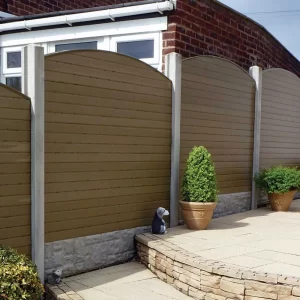
The grid street pattern of Central East Austin means that many fence lines in this neighborhood run directly along rear alleys. The moisture conditions along alley boundaries are often different from the yard-side of the same fence. Alleys typically have slower drainage than maintained yards, and alley surfaces accumulate organic material and debris that retains moisture at the fence boundary. Post bases along the alley may experience more sustained moisture contact than post bases on the yard side.
Sustained moisture contact at the post base accelerates deterioration at that specific point. The combination of Austin clay soil’s moisture retention and alley drainage conditions creates a demanding environment for post bases along alley-adjacent fence lines. Ensuring thorough stain penetration on the alley-facing boards and keeping soil and debris cleared from direct contact with the post base are the most practical maintenance steps for alley-adjacent fences.
Our fence inspection service includes post stability assessment and stain condition evaluation during the inspection visit. For Central East Austin properties where the fence has been in place for several years, an inspection is a useful baseline for understanding the current condition before scheduling staining. Our guide on how long a wood fence lasts in Austin covers what affects cedar longevity in Austin’s conditions and provides useful context for estimating how much useful life the current fence has. Request a free staining estimate and we will assess your Central East Austin fence and give you accurate prep and application pricing.
Setting a Maintenance Schedule for New Horizontal Cedar
Homeowners who have recently installed horizontal cedar as part of a renovation or new construction project often ask when the first staining should happen and how frequently after that. New cedar should wait four to six weeks after installation before receiving its first stain application. Freshly milled cedar has natural moisture content that needs to equalize before the wood is receptive to proper stain penetration. Staining too early produces poor absorption.
After the first application, the standard two-to-three-year cycle applies. Setting a calendar reminder rather than waiting for visible gray is the most effective approach. Cedar that receives staining before significant gray oxidation develops requires less prep work per cycle. Cedar that is allowed to gray significantly requires more intensive cleaning and brightener application before staining, which adds time and cost to each cycle. The homeowners who spend the most on cedar maintenance over a ten-year period are typically the ones who deferred staining repeatedly and then needed extensive prep before each application. Consistent scheduling is more cost-effective than reactive maintenance.