
At Legacy Fence Company, fence staining in South Austin comes up with enough specific variables that a generic Austin staining guide does not fully cover what cedar fence owners south of the river need to know. The tree canopy, the greenbelt proximity, the sloped terrain in parts of the neighborhood, and the variation in sun exposure across different South Austin micro-climates all shape how staining works here and when it needs to happen.
The South Austin staining projects we handle across Travis Heights, Bouldin Creek, Barton Hills, and the areas further south along South Lamar and Manchaca consistently reveal the same patterns. This guide covers those patterns and what they mean for your specific fence.
Here is what shapes fence staining in South Austin and how to calibrate your maintenance approach for this part of the city.
Sun Exposure Variation Across South Austin
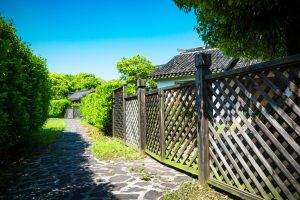
South Austin is not a uniform sun exposure environment for cedar fencing. The tree canopy in Travis Heights and Bouldin Creek, particularly along the blocks closest to Barton Creek and the greenbelt, provides significant shade that reduces UV stress on cedar fence sections under it. The same neighborhoods have fence lines running east-west along the south-facing side of lots that receive full afternoon sun. A single fence on a South Austin property can have sections that need staining every two years and sections that could go three without visible degradation.
Properties in Westgate, Manchaca Village, and the areas further south along the South Lamar corridor have less established tree canopy than the older blocks of Travis Heights and Bouldin Creek. Fence lines in these areas are more uniformly exposed and tend to need staining on the shorter end of the two-to-three-year cycle. South and west-facing fence lines in these sun-exposed areas are the most demanding for maintenance.
Our guide on what type of fence is best for Texas weather covers how UV exposure affects cedar and other fence materials in Austin’s climate. For South Austin cedar specifically, understanding the exposure profile of your fence line before setting a staining schedule is worth the five minutes it takes to walk the fence and assess each section’s sun angle.
Greenbelt Proximity and Moisture Conditions
Properties near the Barton Creek Greenbelt have a distinctive micro-climate compared to the rest of South Austin. The greenbelt corridor brings higher ambient moisture, more consistent shade from riparian vegetation, and cooler air that holds moisture longer. Cedar fence sections near the greenbelt stay damp longer after rain, which creates conditions favorable to mildew growth on shaded fence sections.
Mildew on cedar is not structurally damaging at early stages, but it compromises the appearance of the fence and, if staining is applied over mildewed cedar without cleaning, it prevents proper stain penetration. The prep process for greenbelt-adjacent South Austin fences should include a mildew-targeting cleaning step before any stain is applied. A solution of diluted bleach or a commercial deck cleaner specifically formulated for mildew treatment, followed by thorough rinsing and drying, removes the mildew and allows the subsequent stain to penetrate properly.
Our fence staining service covers greenbelt-adjacent South Austin properties with the appropriate prep chemistry for mildew conditions. We identify mildew during the estimate visit and incorporate the appropriate cleaning step into the project scope and pricing.
Slope and Post Base Conditions in South Austin
The sloped terrain of Barton Hills, parts of Travis Heights, and other hilly South Austin areas affects fence maintenance beyond the staining of boards. On sloped lots, water runs along the ground to the downhill end of the fence line, where it can pool at post bases. Posts at the downhill corners of a fence on a sloped South Austin lot experience more sustained moisture at the ground line than posts elsewhere on the same fence.
This moisture concentration at the downhill post base accelerates deterioration at that point specifically. Ensuring that the cedar post base is protected with thorough stain penetration is more important at the low points of a sloped fence than at the high points. Beyond staining, keeping soil from piling against the post base at low points is the most effective maintenance practice for sloped South Austin lots. A few inches of clearance between soil and wood prevents the sustained wood-soil-moisture contact that drives rot.
Our guide on how long a wood fence lasts in Austin covers what affects cedar longevity in Austin’s climate and is useful context for South Austin homeowners thinking about the relationship between maintenance practices and fence lifespan.
Getting the Staining Schedule Right for Your South Austin Fence
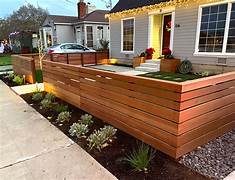
The most practical approach to staining schedule in South Austin is to walk your fence line and identify the most exposed section, the section with the most direct sun through the longest part of the day. That section determines the staining cycle for the entire fence. If that section needs staining every two years, the full fence gets stained on that cycle even if shaded sections could go longer.
The practical indicators that staining is due are visible graying of the cedar and the appearance of surface checking, which are small cracks along the grain that develop when cedar loses moisture protection and begins to dry excessively. When these signs appear on the most exposed section of your fence, staining should be scheduled promptly. Delaying after these signs appear allows the exposed wood to absorb moisture and UV damage at an accelerating rate.
Our fence inspection service includes a stain condition assessment during the inspection visit. If you are not sure whether your South Austin cedar needs staining or how to evaluate it, a professional assessment is a reliable starting point. Request a free staining estimate and we will walk your fence, evaluate the stain condition, and recommend the right prep and stain product for your specific South Austin property.