
At Legacy Fence Company, fence staining in Tarrytown comes with a set of characteristics that make it distinct from most Austin staining work. The large lots produce long fence lines that are substantial staining projects in their own right. The live oak canopy creates mixed shade conditions across the fence line that require calibrated staining schedules rather than a single blanket cycle. And the high property values and neighborhood appearance standards create a context where the quality of the staining result is genuinely important.
The Tarrytown cedar fence owners in Austin TX we work with in this neighborhood take cedar maintenance seriously, which is one reason the cedar fences in Tarrytown tend to look well-maintained compared to equivalent-age fences in neighborhoods with less active maintenance cultures. Here is what fence staining looks like in Tarrytown specifically and what a quality staining program involves on these properties.
This guide covers how to calibrate staining for Tarrytown’s mixed shade environment, what scope looks like on a large lot, and what quality means for cedar staining at this property value level.
Calibrating Staining for Mixed Shade and Sun in Tarrytown

Tarrytown’s live oak canopy creates some of the most varied fence line sun exposure of any Austin neighborhood. On a typical Tarrytown property, a single fence line may run through zones of full shade under a canopy, dappled shade at the canopy edge, and full south or west sun on sections that the oaks do not cover. These sections behave differently in terms of stain depletion. The full-sun section uses up UV protection at the standard Austin rate. The fully shaded section uses it at a much slower rate.
The practical staining schedule for a Tarrytown cedar fence is set by the most exposed section. If the most sun-exposed section of the fence needs attention after two years, the full fence gets stained on that cycle even if the shaded sections are still in better condition. Selectively staining only the exposed sections and leaving the shaded ones is not practical from an appearance standpoint, since the stained and unstained sections would look visibly different. A consistent whole-fence cycle based on the most exposed section is the simplest and most effective approach.
Our guide on how long a wood fence lasts in Austin covers how staining frequency and sun exposure interact to determine cedar fence longevity in this climate. For Tarrytown properties where the fence line runs through dramatically different exposure conditions, an estimate visit that walks the full fence line and assesses each section’s current stain condition is the most reliable way to set the right maintenance schedule.
Staining Long Fence Lines in Tarrytown: What the Scope Looks Like
Tarrytown fence staining projects are larger in scope than most Austin residential staining work because the lots are larger and the fence lines are longer. A staining project that covers three hundred to five hundred or more linear feet of cedar fence on a large Tarrytown property is a multi-day project. The prep work alone, pressure washing and wood brightener application across that footage, is a full day on a larger Tarrytown fence. Stain application and drying follow.
The extended scope also means that consistency in stain application is more demanding on a large Tarrytown fence than on a shorter suburban fence. A small variation in coverage or application technique is less visible on a fifty-foot fence than on a four-hundred-foot fence where the variance compounds across the full length. We use consistent application technique and the same batch of stain product across the full project to avoid the appearance variation that can occur when different portions of a large fence project are handled differently.
Our fence staining service covers Tarrytown across the full range of fence sizes in this neighborhood. We provide per-linear-foot staining estimates that reflect the actual scope of the project after measuring the fence on-site during the estimate visit.
Staining Quality Standards for Tarrytown Cedar
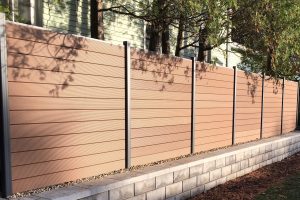
The high property values in Tarrytown create a context where fence appearance matters in a way it does not in all Austin neighborhoods. A Tarrytown cedar fence that is poorly stained, inconsistently covered, or stained without adequate prep is a visible quality failure on a high-value property. Getting staining right on a Tarrytown fence means thorough prep, quality stain product with appropriate UV stabilization for Austin’s climate, complete coverage on all board faces, and consistent appearance across the full fence length.
Stain color selection in Tarrytown also matters more than in some other Austin neighborhoods because the fence is a visible element of a property where aesthetic decisions receive attention. Warmer cedar-tone stains that complement the mature wood character of the neighborhood are the most common choices. Darker cedar stains give the fence a more refined and deliberate appearance that suits Tarrytown’s upscale residential character. Lighter gray or driftwood tones work on properties where the house exterior has a cooler or more contemporary palette.
Our guide on what type of fence is best for Texas weather provides context for how cedar and staining interact in Austin’s climate. For Tarrytown homeowners who are also considering whether their next fence replacement might be composite or vinyl rather than cedar, this guide covers the material trade-offs in Austin’s conditions. Request a free staining estimate for your Tarrytown property and we will walk the full fence line, assess the current stain condition and prep requirements, and give you an accurate written quote.