
At Legacy Fence Company, horizontal cedar fence installation has become one of the standard requests in Central East Austin, particularly on new construction and renovated properties throughout Holly, Govalle, and the infill development areas along the Airport Boulevard corridor. The contemporary architectural character of new construction in this part of the city has driven demand for fence styles that match it, and horizontal cedar has emerged as the clear choice for homeowners who want a fence that looks intentional rather than generic.
Across Central East Austin infill fence projects, horizontal cedar is requested consistently on properties where the house has been renovated or newly built with a contemporary design approach. This guide covers what makes horizontal cedar work well in Central East Austin, how it differs structurally from board-on-board, and what a quality horizontal installation looks like in this neighborhood context.
Here is what to know about horizontal fencing in Central East Austin specifically.
Why Horizontal Cedar Fits Central East Austin
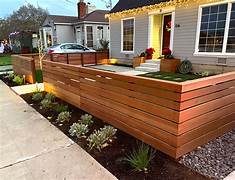
The contemporary architectural character of Central East Austin’s infill development is the primary driver of horizontal cedar’s popularity in this neighborhood. When a 1960s bungalow on a Holly street has been renovated with a modern exterior, a flat roofline addition, and contemporary landscaping, a board-on-board cedar fence reads as a mismatch. Horizontal cedar, with its clean parallel lines and more refined visual profile, reads as a natural complement to that design language. The same property with a traditional board-on-board fence feels incomplete in a way that horizontal cedar does not.
The minimal HOA governance throughout most of Central East Austin gives homeowners the latitude to choose horizontal cedar without navigating an approval process. In North or Southeast Austin’s governed communities, horizontal cedar sometimes requires specific HOA review or approval because it falls outside the standard approved styles. In Central East Austin, where most residential properties are not HOA-governed, the decision to use horizontal cedar is a design choice rather than a regulatory process. This flexibility contributes to the consistent demand for horizontal fencing in this part of the city.
Our wood fence installation service covers horizontal cedar in all configurations relevant to Central East Austin, from standard privacy horizontal fencing to the horizontal-with-gap semi-privacy style that is occasionally preferred for aesthetic reasons on properties where full privacy is less critical.
Structural Differences Between Horizontal and Board-on-Board Cedar
The key structural difference between horizontal cedar fencing and board-on-board is in the framing system. Board-on-board cedar uses horizontal rails attached to posts, with vertical boards nailed to the rails. The vertical boards hang from the rails and gravity assists in keeping them vertical and consistent. Horizontal cedar reverses this: the boards run horizontally and are supported by vertical framing members attached to the posts. Gravity now pulls the boards away from the fence plane rather than supporting them, creating a sag tendency that does not exist in vertical board-on-board.
Preventing sag in horizontal cedar requires vertical support members spaced closely enough to support the board weight and resist the bending force along the board’s length. The appropriate spacing depends on the board dimensions and the span between posts. Horizontal cedar installations that use framing designed for vertical boards will develop visible sag in the horizontal runs within a few years, particularly on longer post spans. We size the vertical support framing for every horizontal cedar installation based on the board dimensions and post spacing of the specific project.
Board grade matters more in horizontal cedar than in vertical board-on-board. Horizontal boards are viewed along their full length at a consistent viewing angle, which makes any significant knot, warping, or grain inconsistency more noticeable than it would be on a vertical board where the eye moves along the board length more quickly. Number 2 or better cedar is the appropriate minimum grade for horizontal cedar in Central East Austin. For fence sections on high-visibility property boundaries, Select grade cedar is worth considering for the more consistent grain and cleaner finished appearance it provides.
Alley Access and Horizontal Cedar Gates in Central East Austin
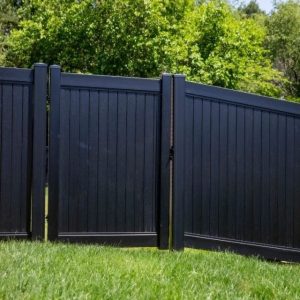
Central East Austin’s rear alley system means that many horizontal cedar fence projects include an alley gate as part of the full perimeter. A horizontal cedar gate that matches the fence panel aesthetic requires a properly engineered gate frame. The horizontal board pattern that gives the fence its visual character also creates a racking tendency in the gate frame that requires internal diagonal bracing to resist. Without adequate internal bracing, a horizontal cedar gate will rack out of square over time, dragging on the ground and eventually failing to close properly.
We build every horizontal cedar gate with appropriate internal diagonal bracing as standard practice. The gate frame is built to resist racking, the hinge hardware is sized for the gate weight, and the latch and keeper are set for reliable engagement before the project is closed. Alley gate width is determined by the intended use during the estimate conversation, and post depth for alley gates follows the deeper gate post specification that applies to all gate post installations.
Our guide on what type of fence is best for Texas weather covers material and construction considerations for Austin’s climate. Our guide on fence types available for Austin properties provides the broader material comparison context for homeowners still deciding between horizontal cedar, board-on-board, vinyl, and other options. Request a free estimate for your Central East Austin property and we will assess the site, discuss the horizontal cedar configuration that fits your lot and style, and provide a complete written quote.
Staining Horizontal Cedar in Central East Austin
Horizontal cedar requires the same staining maintenance as vertical cedar in Austin’s climate. The two to three year staining cycle applies, with the more exposed south and west-facing sections driving the schedule for the full fence. The prep process, including pressure washing and wood brightener on grayed cedar before staining, is the same regardless of board orientation.
One practical characteristic of horizontal cedar is that weathering and gray oxidation appear more uniform and visually consistent across the full fence surface than on vertical board-on-board, where weathering patterns can be more varied. This makes the staining-is-needed indicator more visually obvious on horizontal cedar. When the fence has reached a uniform gray, the entire fence is telling you the stain has depleted. A two-year consistent staining cycle prevents the fence from reaching that point and keeps the horizontal cedar looking the way it did when newly installed.