
One of the most common questions Legacy Fence Company gets from Austin homeowners is how long the installation will take. The honest answer is that it depends on the fence material, property size, terrain, weather, and whether permits or HOA approvals are involved. But there are realistic ranges for every fence type, and knowing what to expect helps you plan around the project.
Here is a breakdown of installation timelines for every fence type we install, what factors cause delays, and how you can help speed up the process.
Installation Timelines by Fence Type
Wood and Cedar Fences
Two to four days for most residential projects. A standard backyard perimeter of one hundred fifty to two hundred linear feet with one or two gates typically takes two to three days. The first day is spent setting posts in concrete and allowing the concrete to begin curing. The second and third days are for rail and board installation, gate hanging, and cleanup.
Board-on-board privacy fences take slightly longer than side-by-side because the overlapping board pattern requires more material and more time per section. Horizontal slat fences also take slightly longer than vertical because the spacing must be consistent across every board. Cedar and pine install at the same speed since the construction process is identical regardless of wood species.
Composite Fences
Two to four days. Composite panels come in fixed dimensions, so post spacing must be precise before any panels go up. Planning and layout take slightly longer than wood because there is no room to adjust board width on site. Once posts are set and the layout is confirmed, panel installation moves efficiently. No follow-up staining or sealing is needed, so the project is truly finished when the crew leaves.
Vinyl Fences
One to three days. Vinyl panels slide into routed posts, which makes installation faster than board-by-board wood construction. The panels lock into place with minimal fastening. Most standard residential vinyl fences are completed in two days or less. Vinyl is often the fastest fence type to install because of the modular panel system.
Pool Fences
One to two days for most residential pools. Aluminum pool fences with standard panel systems install quickly because the panels are pre-fabricated. The additional time comes from verifying code compliance on gate hardware, latch height, and fence height at every point along the perimeter. We test every gate for self-closing and self-latching function before leaving the site.
Commercial Fences
Three days to two weeks depending on the scope. Small commercial perimeters with chain link can be completed in a few days. Larger projects with multiple gates, access control systems, heavy-gauge steel, and hundreds of linear feet take longer. Multi-phase commercial projects are scheduled around business operations and tenant access. We provide a detailed timeline with every commercial estimate.
Factors That Affect Installation Time in Austin
Terrain and Soil
Flat lots with clay soil in Pflugerville, Round Rock, and eastern Cedar Park are the fastest to fence. Post holes go in quickly with standard auger equipment and the ground is level. Sloped lots require stepping or racking panels to follow the grade, which adds time per section. Properties in Lakeway, Bee Cave, and Westlake Hills often have limestone at shallow depth that requires drilling equipment. Each post takes longer to set in rock, and the crew needs to carry additional equipment to the site.
Weather
Rain delays installation. Concrete footings need dry conditions to set properly. Wet soil around post holes can compromise the footing before it cures. We monitor weather forecasts and adjust scheduling to avoid pouring concrete during or immediately before heavy rain. Austin’s spring storm season can occasionally push timelines by a day or two, but we communicate any weather delays as soon as they become likely.
Permits and HOA Approvals
If your project requires a City of Austin permit or HOA architectural review committee approval, this adds lead time before installation can begin. Permit processing varies from a few days to a few weeks depending on the type and backlog. HOA approvals can take one to four weeks depending on the community and how frequently the review committee meets. We recommend starting the approval process as early as possible so it runs in parallel with material ordering and scheduling.
Material Availability
Most standard materials are in stock or available within a few days. Specialty materials, custom colors, or specific composite panel systems may have longer lead times, especially during peak season. We confirm material availability during the estimate so you know the expected delivery timeline before you commit.
Scheduling Season
Spring and early summer are the busiest fencing seasons in Austin. Every contractor in the area has a longer backlog during this period. Scheduling lead times are longest from March through June. Fall and winter typically have shorter wait times, more flexible scheduling, and sometimes faster material delivery because demand is lower across the industry.
How to Speed Up Your Fence Installation
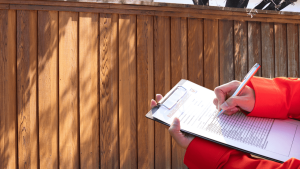
Start with your estimate early. Do not wait until you need the fence next week. Schedule your estimate a few weeks before you want the project completed, especially during peak season. This gives you time for HOA approval, material ordering, and scheduling without rushing.
Get HOA approval before scheduling installation. If your neighborhood requires architectural review, submit your design as soon as you have your estimate. This runs in parallel with material ordering and crew scheduling, so it does not add dead time to the process.
Clear the fence line before the crew arrives. Remove furniture, planters, toys, and debris from the planned fence path. Mark sprinkler heads and landscape lighting near the path. Secure pets away from the work area. This saves the crew setup time on installation day and prevents delays from having to move items before they can start.
Be flexible on scheduling. If you can accept a weekday slot instead of holding out for a specific Saturday, you may get on the schedule one to two weeks sooner. Weekday installations also tend to have fewer interruptions and move faster.
If your fence project is tied to a hard deadline, such as a pool inspection, a home sale closing date, or an HOA compliance notice, let us know during the estimate. We prioritize deadline-driven projects and can often adjust our schedule to meet a firm completion date when we know about it early in the process. Planning ahead gives you the most flexibility and the shortest path to a finished fence.
Does Replacement Take Longer Than New Installation?
Yes. Replacement projects include a removal phase before installation can begin. Removing an old fence, extracting posts, breaking out old concrete, hauling debris, and prepping the site typically adds half a day to a full day to the overall project timeline compared to installing on a clean lot with no existing fence.
The removal timeline depends on the existing fence material and how it was originally installed. A pine fence with shallow posts and no concrete comes out quickly. A cedar fence with posts set three feet deep in concrete takes longer to extract. Chain link with concrete footings takes the most time per post because the mesh must be detached before the posts can be pulled.
If you are replacing your fence and want the project completed as fast as possible, make sure removal is discussed during the estimate. Ask the contractor whether removal and installation happen on the same day or whether they are scheduled separately. Some contractors remove one day and install the next. Others handle both in a continuous workflow depending on crew availability and project size.