
At Legacy Fence Company, composite fencing is one of the most frequently debated topics we discuss with Austin homeowners. The upfront cost is higher than cedar, and that gap stops many people from considering it seriously. But the right way to evaluate any fence investment is on total cost over the full life of the fence, not just the installation day number. This guide works through that comparison honestly, with Austin’s specific climate and maintenance reality in mind.
The answer to whether composite is worth it looks different in every part of Austin TX. A homeowner on a shaded North Austin lot with a carefully maintained cedar fence may find cedar works perfectly well for fifteen years. A homeowner on a south-facing South Austin lot where the fence line gets full sun from morning to evening will often find that cedar deteriorates significantly faster without expensive and consistent maintenance. The right answer depends on your specific situation, and this guide walks through how to think about it.
Here is the honest version of the composite versus cedar comparison in Austin.
What Cedar Fencing Actually Costs in Austin Over Ten Years
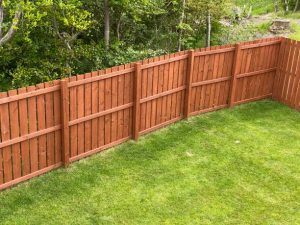
Cedar has a lower upfront installation cost than composite, and that advantage is real. But cedar in Austin does not maintain itself. The sun, heat, and UV exposure that define Austin summers break down untreated cedar faster here than in more temperate climates. Staining or sealing a cedar fence every two to three years is the standard recommendation for Austin homeowners who want their fence to last. Each staining cycle has a cost, whether you hire it out or do it yourself in time and materials. Over ten years, that adds up to several staining cycles worth of maintenance expense on top of the original installation cost.
Board replacements are the other cedar cost that homeowners often underestimate. Cedar boards that crack, warp, or rot need to be replaced before they affect the structure of the fence. On a fence line with significant sun exposure, this is not a hypothetical scenario. It is a routine part of cedar ownership in Austin. Our guide on how long a wood fence lasts in Austin covers what drives cedar longevity here and what the realistic maintenance expectations are for this climate.
The honest ten-year total cost of a cedar fence in Austin includes installation, staining cycles, board replacements, and in some cases a full replacement toward the end of the period. When those costs are added together, the gap between cedar and composite narrows considerably, and for some homeowners it disappears entirely.
What Composite Fencing Costs Over the Same Period
Composite fencing has a higher upfront installation cost than cedar. Once it is installed, however, the ongoing cost is near zero for the fence boards and rails. Composite does not need staining. It does not warp or crack in Austin heat. Boards do not need to be individually replaced as they degrade. The only real maintenance cost is occasional cleaning. Over a ten-year period, a quality composite fence installation typically has a lower total cost of ownership than cedar that is correctly maintained, and a significantly lower total cost than cedar that is not.
The product tier matters. Entry-level composite with high wood fiber content and limited UV stabilization can perform more like wood over time, particularly in high-sun Austin exposures. The performance advantage is most pronounced in premium composite products with strong UV stabilization ratings. When evaluating composite options, ask about the product’s UV treatment, warranty terms, and whether it has been tested in high-heat climates similar to Austin’s.
The ten-year cost advantage of composite is most significant for homeowners who would realistically skip cedar staining cycles. If cedar maintenance gets deferred year after year, the fence degrades faster and the eventual replacement comes sooner. Composite removes that variable entirely from the equation.
When Composite Fencing Is Worth It in Austin
Composite fencing makes the clearest financial and practical sense under specific conditions. High sun exposure is the most decisive factor. South and west-facing fence lines in Austin, where the fence takes full sun for six or more hours per day, are where cedar degrades fastest and where composite holds its advantage most clearly. If your fence line runs in a direction that gives it significant UV exposure throughout the day, composite is almost always worth the upfront premium.
Maintenance habits are the second decisive factor. Homeowners who genuinely maintain cedar on schedule and find satisfaction in it may find cedar a reasonable long-term choice. Homeowners who know they will not stay on top of staining cycles will almost certainly find composite the better investment even before factoring in the sun exposure. The ten-year math on unmaintained cedar in Austin almost always favors composite.
Longer ownership horizons and HOA communities that permit composite round out the situations where composite clearly makes sense. The longer you plan to own the property, the more years of maintenance cost reduction composite delivers. Our guide on the pros and cons of composite fencing for Texas homes covers the full picture including the cases where composite is not the right call.
When Cedar or Vinyl Might Make More Sense
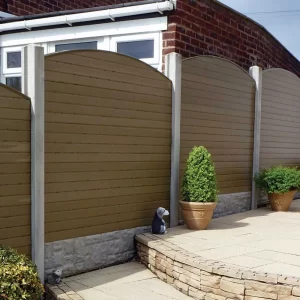
Composite is not always the right answer. If you plan to sell the property within five years, the long-term maintenance cost advantage of composite may not fully materialize before the sale. Cedar at a lower upfront cost may be the more practical choice for a short ownership window. If your HOA specifies cedar only and does not have a process for composite approval, cedar is the only compliant option regardless of preference.
Vinyl is a third option worth considering for homeowners who want low maintenance without the composite price premium. Vinyl does not have the natural wood appearance of composite but performs well in Austin’s climate and costs less upfront than composite. For homeowners who prioritize function and budget over aesthetics, vinyl is a legitimate alternative.
The best way to determine which material is right for your specific property is a site estimate that accounts for your fence line orientation, soil conditions, HOA requirements, and budget. Request a free fence estimate and we will walk through the options for your specific situation.