
At Legacy Fence Company, pool fence installation is one of the more specialized services we provide in Austin, and it comes with a distinct set of requirements compared to a standard privacy fence. The material options, gate specifications, height requirements, and inspection considerations are all specific to pool enclosures. Understanding them before you start the project saves time and prevents compliance issues after the fence is in.
For pool owners across Austin TX, pool owners across Austin TX face a consistent set of decisions when adding or replacing a pool enclosure: which material fits the property and budget, how to handle the self-closing gate requirement, and how to design the enclosure so it meets Austin code while still working with the surrounding landscape.
This guide covers the pool fence options available in Austin, what the installation process involves, and what to expect from gate requirements. For a full breakdown of Austin’s compliance requirements, see our guide on whether a pool fence is required in Austin.
Types of Pool Fencing Available in Austin

Aluminum ornamental fencing is the most commonly installed pool fence type in Austin. It is durable, looks professional in most outdoor settings, and satisfies Austin code requirements with options at four feet and taller. Aluminum does not rust, holds up well in Austin’s heat, and requires minimal maintenance beyond occasional cleaning. It is available in a range of styles from simple flat-top panels to more decorative spear-top designs. For most Austin homeowners, aluminum offers the best combination of appearance, durability, and cost.
Vinyl pool fencing is a second option that performs well in Austin’s climate. It does not corrode or require painting, and it is available in styles that satisfy the four-foot code height requirement. Vinyl tends to cost slightly less than aluminum in most configurations. The trade-off is that vinyl has a more manufactured appearance at close range and can become brittle over time in high-UV conditions without UV stabilization in the material formula. Quality vinyl pool fencing with proper UV treatment holds up well in Austin.
Removable mesh pool fencing offers a lower-cost alternative for homeowners who want the option to take the fence down when the pool is not in use. It uses post anchors set into the pool deck rather than posts set in the ground, which makes it removable without full reinstallation. Glass panel pool fencing is the premium option for homeowners who want an unobstructed view of the pool. It costs significantly more than aluminum or vinyl but delivers a clean, contemporary appearance that works well with modern pool designs.
What Austin Pool Fence Code Requires
Austin requires pool fences to be at least four feet tall on all sides of the enclosure. The fence must be designed to prevent a child from climbing over or squeezing through it, which affects the spacing of rails and pickets. The pool enclosure must have no gaps at the bottom that would allow a child to pass underneath. All openings in the fence, including gates, must meet specific dimension requirements.
Gate requirements are among the most specific aspects of Austin pool fence code. Every gate in a pool enclosure must be self-closing and self-latching. The gate must open outward, away from the pool. The latch must be positioned at a height that a young child cannot reach from outside the gate. These requirements apply to all gates in the enclosure, including any gates used by adults as the primary access point.
For a complete breakdown of Austin’s pool fence compliance requirements and how they apply to your specific property, our guide on pool fence requirements in Austin covers the full framework. We review all code requirements for every pool fence project during the estimate process to make sure the design is compliant before installation begins.
The Pool Fence Installation Process
Pool fence installation follows the same fundamental process as other fence types, with a few additional considerations specific to pool enclosures. The project starts with a site estimate where we assess the pool area, measure the perimeter, review the surrounding hardscaping, and identify post locations that avoid utility lines and pool equipment. Post placement around pool decks sometimes encounters concrete or limestone substrate close to the surface, which we factor into the installation approach.
Our pool fence installation service handles the full scope from post setting to panel installation to gate hanging and hardware adjustment. Posts are set at proper depth for Austin clay soil conditions. Panels are installed to meet height requirements on all sides. Gates are hung, adjusted for self-closing function, and the latch mechanism is set at the required height. We test the gate function before leaving the site to confirm it meets the self-closing and self-latching requirements.
Most residential pool fence installations in Austin are completed in one day. Larger pools or more complex enclosure configurations may take two days. After installation, we walk the enclosure with you to verify panel heights, gate function, and overall compliance before the project is closed out.
Gate Options for Pool Enclosures in Austin
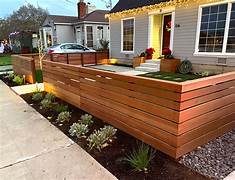
Gate selection for a pool enclosure is more constrained than for a standard residential gate because of the self-closing and self-latching requirements. The gate hardware must include a hydraulic or spring-loaded closing mechanism that reliably returns the gate to the closed position without manual assistance. The latch must be a positive-catch type that engages automatically when the gate closes. We use hardware specifically designed for pool enclosure applications on every pool gate we install.
Gate width and location choices affect the enclosure layout. A single walk-through gate is the standard configuration for most Austin residential pools. Properties that need vehicle access to the pool area or have larger pool decks may use a wider double gate. Our gate installation service covers all pool enclosure gate configurations, including any automated gate options if the property requires them.
The best first step is an on-site assessment where we can measure the pool perimeter, identify post locations, and review your HOA requirements if applicable. Request a free pool fence estimate and we will come out to evaluate your specific pool layout and give you accurate options and pricing.