
Central Texas storms can hit fast and hit hard. High winds, hail, heavy rain, and falling tree limbs can knock down fence sections, snap posts, and scatter boards across your yard in a matter of minutes. Legacy Fence Company handles storm damage fence repair across Austin and Central Texas, and the calls spike every time a major system moves through the area.
If your fence has been damaged by a storm, here is exactly what to do, in what order, and how to get the repair handled as quickly as possible.
Step One: Document the Damage Before Touching Anything
Before you move boards, prop up sections, or start cleanup, take photos and video of the damage from multiple angles. Document the full scope: every fallen section, every broken post, every damaged gate. Get close-up shots of broken components and wide shots that show the overall damage pattern along the fence line.
This documentation serves two purposes. First, it gives your fence contractor a clear picture of the damage before they arrive on site, which helps them prepare materials and provide an accurate estimate. Second, it supports your insurance claim if you file one. Insurance adjusters want to see the damage as it was found, not after cleanup or temporary repairs have altered the scene.
If a tree or large branch fell on the fence, photograph the tree and the point of impact before any cutting or removal happens. This establishes cause, which matters for insurance.
Step Two: Check for Safety and Security Issues

Walk the fence line and assess whether the damage creates an immediate safety or security concern. The two highest-priority situations are pool barriers and pet containment.
If the storm damaged your pool fence, the barrier is no longer code-compliant. An open pool enclosure is a liability and a safety risk, especially for children. Contact your fence contractor immediately and explain that the damage involves a pool barrier. This should be treated as an emergency repair with priority scheduling.
If the damage has created gaps or openings in the fence, secure pets inside the house until the fence is repaired. Dogs and cats will find new openings quickly. If the gap is on a busy street or near a hazard, a temporary barrier like a piece of plywood or a section of wire fencing can close the opening until the repair crew arrives.
If the storm brought down a gate, check whether the opening is accessible to the public. An open gate facing a street or alley is a security concern. Prop or brace the gate closed temporarily if you can do so safely.
Step Three: Contact Your Fence Contractor
Call your contractor as soon as the immediate safety issues are addressed. After major storms, every fence contractor in Austin gets a surge of calls. The sooner you reach out, the sooner you get on the schedule. Send your photos when you call or submit your request online so the contractor can begin assessing scope before the site visit.
Let the contractor know the priority level. A fallen pool barrier is an emergency. A few broken boards on a backyard fence is urgent but not an emergency. Being clear about the severity helps the contractor prioritize your job appropriately.
The contractor will schedule an on-site inspection to assess the damage, determine whether repair or replacement is the right approach, and provide a written estimate. For storm damage, the inspection also checks for hidden issues that may not be obvious from the surface: cracked footings below grade, loosened post connections that did not fully fail, and shifted panels that look upright but are no longer secure.
Step Four: Consider Filing an Insurance Claim
Many homeowner insurance policies cover fence damage caused by storms, wind, fallen trees, and hail. Coverage varies by policy and deductible. Contact your insurance company to report the damage and ask whether a fence claim is worth filing based on your deductible and coverage limits.
Your fence contractor can provide a written repair estimate that you submit to the insurance company as part of your claim. Some contractors will also provide documentation including photos and a scope-of-work description that supports the claim. Ask your contractor what documentation they can provide before you file.
Keep in mind that the insurance claim process takes time. Do not delay emergency repairs on pool barriers or security fences while waiting for claim approval. Get the safety issue fixed and work with your insurance company on reimbursement after the fact.
Types of Storm Damage We See in Austin
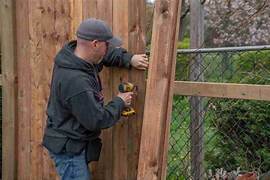
Wind is the most common cause of fence damage in Central Texas. Strong gusts push fence panels like sails, putting lateral force on the posts. Privacy fences with solid boards catch the most wind. Posts that are shallow or lack adequate concrete snap or lean under the load. Entire sections can go down in a single gust.
Fallen trees and branches are the second most common cause. A large limb falling on a fence crushes boards, breaks rails, and can snap posts at the base. Even if the limb is removed, the structural damage underneath often requires post replacement and panel rebuilds.
Hail dents and cracks fence boards, especially older wood that is already dried out and brittle. Hail damage may not cause immediate structural failure, but it weakens the wood surface and accelerates moisture penetration, which leads to rot if left unaddressed.
Flash flooding can erode soil around post bases, especially in low-lying areas and properties near creeks. When the soil washes away from the footing, the post loses lateral support and leans or falls. This type of damage is common in parts of Cedar Park, Georgetown, and along creek beds throughout the Austin metro.
How to Reduce Storm Damage Risk
Post depth is the best defense against wind damage. Posts set three feet deep in concrete resist wind loads significantly better than posts set eighteen inches deep. If your fence blew down in a storm, the replacement should go deeper than the original.
Trim tree branches that overhang or are near the fence line. Falling limbs are a preventable cause of fence damage. Annual tree trimming reduces the risk. Pay attention to dead branches, which are the first to fall in a storm.
Consider your fence material. Composite and vinyl panels flex under wind load instead of snapping. They are not immune to storm damage, but they tend to suffer less catastrophic failure than wood in high-wind events. If you are replacing a storm-damaged wood fence and live in a high-wind area, composite or reinforced panels are worth considering.
After the Repair: Inspect the Rest of the Fence
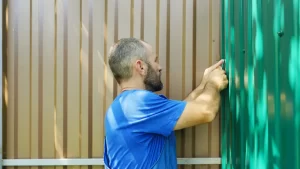
Storm damage gets your attention on the sections that obviously failed. But storms can also weaken parts of the fence that did not fall. Posts that absorbed wind force but stayed upright may have loosened at the base. Panels that flexed under load may have pulled fasteners partway out. Gates that held closed may have shifted enough to affect latching and alignment.
After the visible damage is repaired, we recommend walking the entire fence line to check for hidden issues. Push on each post and feel for movement. Check rails for cracks at the post connections. Test every gate for smooth operation and secure latching. If anything feels loose or different than before the storm, note it for your contractor.
Catching these secondary issues now prevents them from becoming primary failures in the next storm. A post that loosened but did not fall will fall the next time high winds hit. A rail that cracked but did not separate will give way under the next load. Storm damage repair should address the full scope, not just the most obvious failures.