
At Legacy Fence Company, vinyl fence installation is a more significant part of our Southeast Austin work than in most other parts of the city. The newer HOA communities that make up a large portion of Southeast Austin’s residential landscape were established at a time when vinyl fencing was gaining acceptance as a mainstream alternative to cedar, and many of them permit vinyl alongside cedar as an approved material. This has produced a market where vinyl is a genuinely common choice rather than an occasional alternative.
For Southeast Austin fence owners in the planned communities along William Cannon, Slaughter Lane, and the Onion Creek corridor, vinyl offers a specific combination of advantages that match the practical priorities of homeowners in this part of the city. This guide covers why vinyl works well in Southeast Austin, what quality looks like in this product category, and what to expect from the installation process.
Here is what Southeast Austin homeowners should know before choosing vinyl.
Why Vinyl Works in Southeast Austin’s HOA Communities
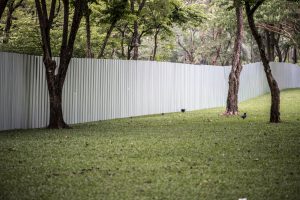
The newer planned communities of Southeast Austin, developed primarily from the 1990s through the 2010s, have HOA fence guidelines that were written when vinyl had already become an accepted mainstream material. Unlike older Austin neighborhoods where cedar was the established standard before vinyl was widely available, Southeast Austin’s HOA guidelines often explicitly list vinyl as an approved option. This means homeowners in these communities can choose vinyl without needing special HOA approval beyond the standard application process.
The practical appeal of vinyl for Southeast Austin homeowners matches well with what newer residential communities value. A fence that does not require staining every two to three years is a meaningful advantage for homeowners who do not want ongoing maintenance commitments. HOA communities where fence appearance is subject to community standards also benefit from vinyl’s consistent appearance over time, since vinyl does not gray or develop the patchy appearance of cedar that has received inconsistent staining.
Our vinyl fence installation service covers Southeast Austin across all the planned community configurations where vinyl is permitted. We confirm the specific HOA-approved vinyl style and color before any material is ordered, to ensure the installed fence meets the community requirements from the day it is completed.
How Vinyl Performs in Austin’s Climate
Austin’s combination of intense summer UV, high heat, wide temperature swings between seasons, and alternating wet and dry conditions creates a demanding environment for fence materials. Quality vinyl fencing handles these conditions well. The key variables are wall thickness and UV stabilization in the vinyl formula. Thicker-wall vinyl is more resistant to impact damage and less prone to the flexing that thinner vinyl undergoes in Austin’s temperature swings. UV-stabilized vinyl resists the surface chalking and fading that affects vinyl without stabilization in high-sun environments.
The performance difference between entry-level and quality vinyl is meaningful in Austin’s climate. Entry-level vinyl with thin walls and minimal UV stabilization will show chalking and surface degradation within a few years in fully exposed south and west-facing fence lines in Austin. Quality vinyl with appropriate wall thickness and UV treatment maintains its appearance significantly longer. When evaluating vinyl fence estimates, ask specifically about the wall thickness specification and whether the product has UV stabilization rated for high-UV environments.
Our guide on what type of fence is best for Texas weather covers how vinyl compares to cedar and composite in Austin’s climate and is useful context for homeowners in Southeast Austin who are deciding between materials. Our guide on how long a wood fence lasts in Austin covers the cedar alternative in depth for homeowners considering both options.
Vinyl Fence Styles and HOA Approval in Southeast Austin
Residential vinyl fencing in Southeast Austin is available in three main configurations. Full privacy vinyl, which uses solid board-width panels with no gaps, is the most common style in Southeast Austin residential neighborhoods. It delivers the same coverage as cedar board-on-board and is the standard choice for homeowners who want maximum visual privacy. Semi-privacy vinyl, which uses slightly spaced boards to allow some air flow, is a less common alternative. Picket vinyl is used in front yard applications where privacy is not the goal.
Color selection in vinyl fencing is more limited than cedar stain options. White remains the most widely available color across Southeast Austin vinyl products, and some Southeast Austin HOAs specify white vinyl only. Tan, gray, and almond are available from most manufacturers and are permitted in communities that allow colors beyond white. The specific color requirements of your HOA community should be confirmed before selecting a vinyl product to ensure the color is approved.
The HOA application process for vinyl in Southeast Austin typically requires documentation of the proposed material, style, and color alongside any other standard application requirements. We prepare the HOA application documentation as part of the project scope and have experience with the submission requirements of the most active Southeast Austin community associations.
What the Vinyl Fence Installation Process Looks Like
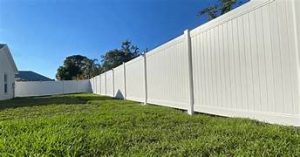
Vinyl fence installation in Southeast Austin follows the same fundamental process as cedar. Posts are set at adequate depth for Austin clay soil, anchored in concrete, and allowed to cure before fence panels are attached. The vinyl fence panel installation is different from cedar in that vinyl uses a rail-and-picket or panel system rather than individually nailed boards. Panels or pickets lock into vinyl rails that attach to the posts, and the alignment and level of the fence is established through careful post setting and panel fitting.
Gate installation on vinyl fences requires vinyl-compatible gate hardware and a gate frame appropriate for the gate weight and size. Vinyl gates use the same self-closing and self-latching hardware requirements as any other residential fence gate and are available in the same configurations as cedar gates. Post setting for vinyl gates follows the same deeper specification as for cedar gates, since gate posts carry more load than standard fence posts regardless of the fence material.
Request a free estimate for vinyl fencing on your Southeast Austin property and we will confirm your HOA requirements, review the applicable style and color specifications, and provide a written quote for the complete installation.