
Hiring a fence contractor in Austin is not the same as hiring one in other parts of the country. Austin has specific soil conditions, HOA landscapes, climate challenges, and permitting rules that affect how a fence should be built. A contractor who does not understand these local factors will build a fence that fails faster. Legacy Fence Company serves Austin and Central Texas, and we have seen the results of hiring the wrong contractor on hundreds of repair and replacement calls.
Here are the questions you should ask before signing with any fence contractor in Austin, what the right answers sound like, and what red flags to watch for.
Are You Licensed and Insured?

Texas does not require a state license for fence contractors. This is important to understand because it means there is no licensing board verifying qualifications, experience, or competence. Anyone with a truck and a nail gun can call themselves a fence contractor in Texas. That makes insurance even more critical.
Ask for a certificate of general liability insurance. This protects your property if the crew damages your home, landscaping, or a neighbor’s property during installation. Ask for a certificate of workers compensation insurance. This protects you if a worker is injured on your property. Without workers comp, you could be held liable for medical expenses.
Do not accept a verbal assurance that they are insured. Ask for the actual certificate. A legitimate contractor will provide it without hesitation. If they cannot or will not produce it, move on.
How Deep Do You Set Fence Posts?
This is the single most important technical question you can ask a fence contractor in Austin. The answer should be a minimum of two to three feet with concrete footings. If the contractor says eighteen inches, two feet without concrete, or tells you post depth depends on the fence height, those are red flags.
Austin sits on expansive clay soil that swells when wet and contracts when dry. This cycle pushes fence posts out of alignment. Posts that are not deep enough or are set without adequate concrete will lean within one to two seasons. We see this every week on repair calls across Pflugerville, Round Rock, Cedar Park, and other areas with heavy clay. The original contractor saved time on post depth and the homeowner paid for it later.
In western Austin, Lakeway, Bee Cave, and Westlake Hills, limestone is common at shallow depth. Ask the contractor how they handle rock. The correct answer involves drilling equipment, not skipping the post or setting it shallower because they hit stone.
What Does the Estimate Include?
A proper fence estimate is a written document with line-by-line detail. You should see materials listed by type and quantity, labor as a separate line item, gate hardware itemized, removal costs if applicable, permit fees if required, timeline, and total cost. If the estimate is a single number on a text message or a verbal quote with no breakdown, that is not an estimate. It is a guess.
Ask specifically whether the estimate includes cleanup and haul-away. Ask whether it includes concrete for every post. Ask whether gate hardware is included or extra. These are common areas where contractors leave items out of the estimate and add them as change orders after the project starts.
Compare estimates on detail, not just price. A lower bid that uses shallower posts, less concrete, and cheaper hardware will cost you more in repairs over the next few years than a slightly higher bid that does the job correctly from the start.
What Materials and Hardware Do You Use?
Ask what wood species the contractor uses. Cedar and pressure-treated pine are the two primary options in Austin. Cedar costs more but lasts longer and requires less maintenance. If a contractor quotes pine at cedar prices, that is a problem. If they do not specify the wood species, ask.
Ask about fasteners. Corrosion-resistant screws and nails last longer than standard steel fasteners in Austin’s humid climate. Standard steel hardware will rust and stain the wood within a year or two.
For composite and vinyl fences, ask which manufacturer and product line they install. Not all composite and vinyl panels are the same quality. Commercial-grade, UV-rated panels cost more but outperform retail-grade products significantly in Austin’s sun exposure.
For gates, ask about hinge weight rating. Gate hinges should be rated for the weight of the gate. Undersized hinges are the most common cause of gate sagging. A contractor who skimps on gate hardware is setting you up for a repair call within a year.
Do You Use Subcontractors or In-House Crews?
Some fence companies sell the project and then subcontract the installation to a crew they do not directly manage. This creates accountability gaps. If something goes wrong, the company points to the subcontractor and the subcontractor points to the company.
Ask whether the crew that shows up to build your fence is employed by the company or subcontracted. In-house crews are trained to the company’s standards, use the company’s equipment, and are accountable to the company directly. Subcontracted crews may have different standards, different equipment, and less accountability.
What Warranty Do You Offer?
Ask about two types of warranty. First, the workmanship warranty: how long does the contractor guarantee their installation? One year is a reasonable minimum. This covers issues like post lean, panel separation, gate misalignment, and hardware failure that result from installation errors rather than material defects.
Second, the material warranty: what does the manufacturer guarantee? Cedar and pine carry no manufacturer warranty because they are natural products. Composite fences often come with manufacturer warranties of twenty to twenty-five years. Vinyl varies by brand. Ask the contractor to explain the material warranty terms before you commit.
Get the warranty terms in writing as part of your contract. A verbal warranty has no value.
How Should Payment Work?
A reasonable payment structure for fence installation is a deposit upfront to cover material ordering, with the balance due upon completion. The deposit amount varies by contractor and project size, but it typically ranges from twenty to fifty percent of the total. Full payment before work begins is a red flag. You lose leverage if the work is not completed to your satisfaction.
Never pay the full balance until you have walked the finished fence with the contractor and confirmed that everything meets your expectations. Gates should operate and latch correctly. Posts should be plumb. Panels should be level. The site should be clean. If something is not right, address it before final payment. A contractor who does quality work will have no problem with this arrangement.
Get the payment terms in writing as part of your contract. This protects both you and the contractor.
Can I See Past Work and References?
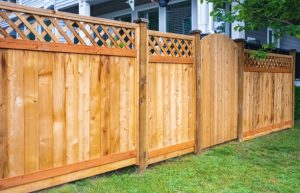
Ask for photos of recently completed projects. Ask for the names and contact information of two or three past customers in your area. A contractor with a track record will provide these without hesitation. A contractor who cannot produce references or photos may not have the experience they claim.
If possible, drive by a fence the contractor built six months to a year ago. Day-one photos look great for every contractor. What matters is how the fence holds up over time. A fence that is leaning, graying, or showing gaps after less than a year tells you everything you need to know about the contractor’s work quality.
Online reviews are useful but read them with context. Look for reviews that mention specific details about the project: post depth, material quality, cleanup, communication, and timeline accuracy. Generic five-star reviews with no detail are less informative than a detailed four-star review that describes what the contractor did well and where they fell short.